
The Top 10 Comedy Documentaries & Documentary Series of 2025

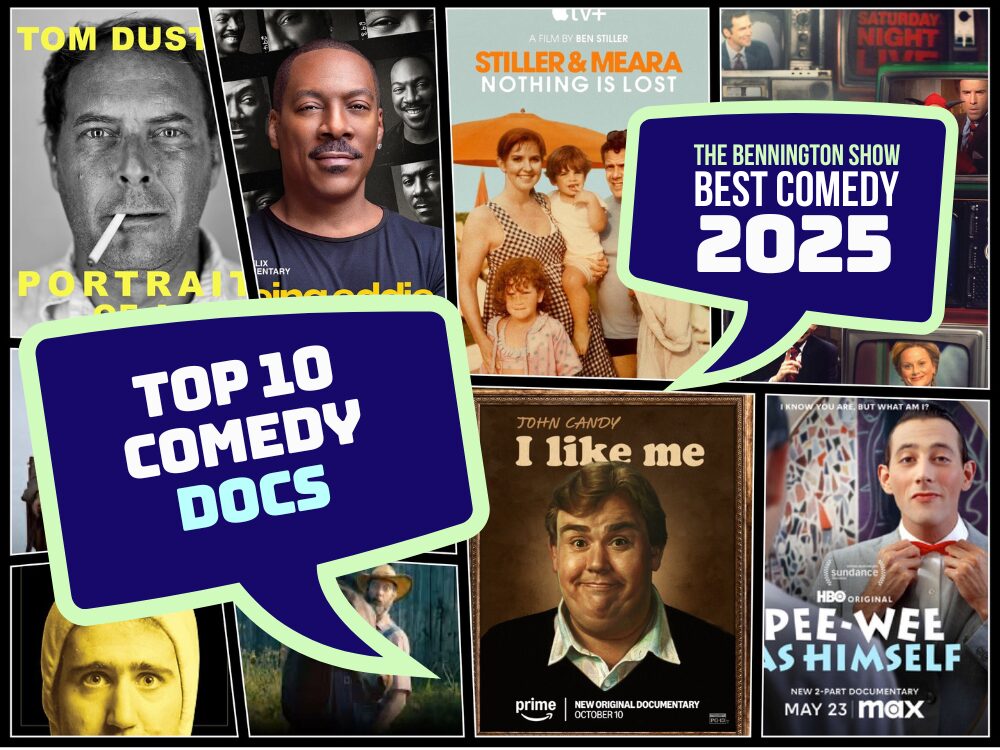
Top 10 Comedy Documentaries or Documentary Series
For the 12th year running, The Bennington Show and The Interrobang are teaming up to let the only voices that matter—the fans—decide the best of the best. While comedy films might be fighting for airtime, the world of comedy documentaries and docuseries has exploded.
In 2025, we saw a shift. Instead of just “talking heads” telling us who was funny forty years ago, we got deep dives into the psychology of the craft, the messy reality of the road, and the strange, often dark intersections where real life and punchlines collide. It wasn’t a perfect year—let’s face it, for every masterpiece, there’s a dozen “puff pieces”—but these ten nominees represent the gold standard of non-fiction comedy.
We’ve done the heavy lifting of narrowing the field down to the top ten. Now, it’s in your hands. This is the only place where the readers hold the power.
Don’t forget you can also vote now for Vote for Comedy Movie of the Year and Comedy TV Series of the Year. Best Book Written by a Comedian, and Independent Comedy Special. Vote for Best Studio Special, and Best Comedy Documentary.

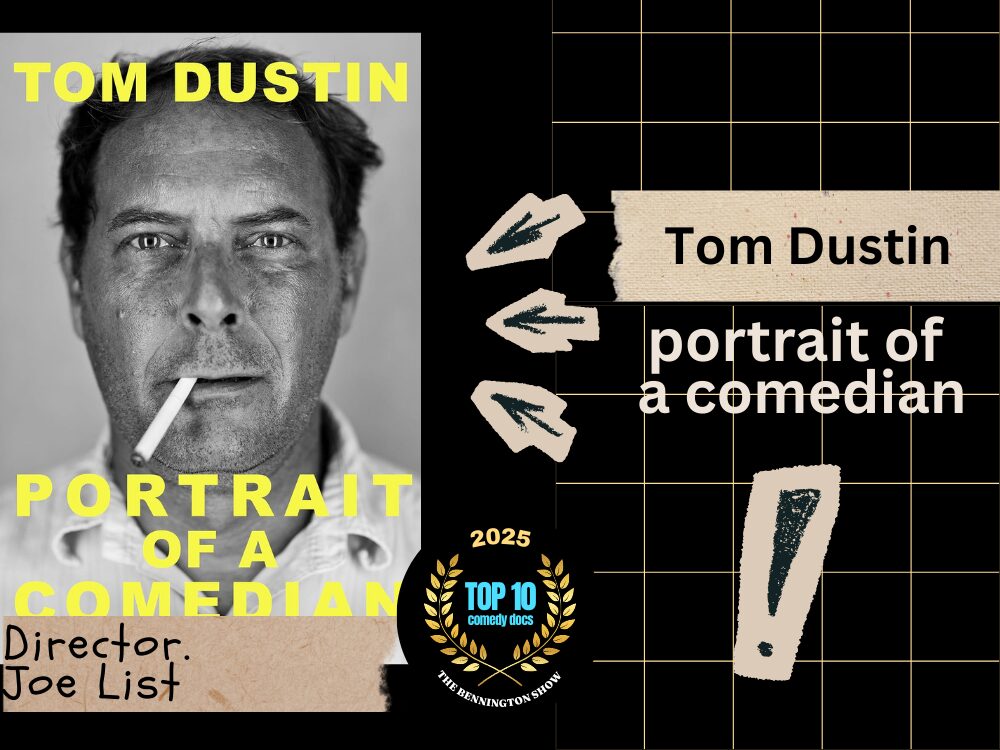
TOM DUSTIN: PORTRAIT OF A COMEDIAN
DIRECTOR: Joe List
AVAILABLE: LIMITED THEATER RELEASE, VOD
Tom Dustin: Portrait of a Comedian is a raw, unvarnished documentary about life on the comedy grind, using Tom Dustin’s career as a window into what it means to keep going when fame never quite arrives. The film follows Dustin, living a different life than some of his comedy friends, living a Key West slower lifestyle. The documentary centers on choices made, routine, rejection, and resilience—and the unglamorous reality most comedians live in. Simultaneously the film looks at life in Key West, and the community of artists that live work and play there. Dustin is funny, self-aware, and candid about frustration, self-doubt, and the strange pride that comes with simply staying in the game.
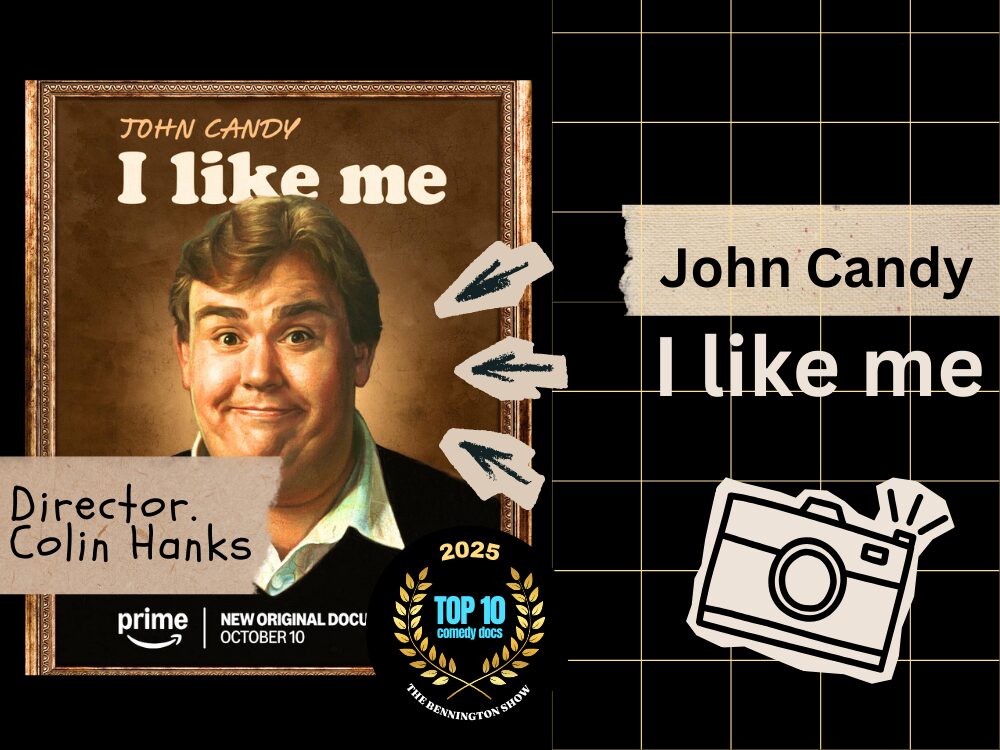
JOHN CANDY: I LIKE ME.
DIRECTOR: Colin Hanks
WITH: Dan Aykroyd, Mel Brooks, John’s Son and Daughter, John’s wife Rosemary, Macaulay Culkin, Tom Hanks, Eugene Levy, Andrea Martin, Steve Martin, Bill Murray, Conan, Martin Short, and more.
AVAILABLE: PRIME VIDEO
John Candy: I Like Me is a warm, affectionate documentary that paints John Candy as more than just a lovable comic presence—it’s a portrait of a deeply generous, insecure, and emotionally complex person who happened to be one of the most naturally funny actors of his era. The film traces Candy’s rise from Second City Toronto and SCTV to Hollywood stardom, Candy’s comedy came from empathy—he played outsiders, optimists, and gentle souls who wanted connection (Planes, Trains & Automobiles, Uncle Buck, The Great Outdoors). A major throughline is the contrast between Candy’s public warmth and private struggles. The documentary also explore Candy’s work ethic, his inability to say no to people, his love fo family, and his sudden death at 43.

BEING EDDIE. EDDIE MURPHY
DIRECTOR: Angus Wall
WITH: Eddie Murphy, Dave Chappelle, Jerry Seinfeld, Charlie Murphy, Arsenio, Tracy Morgan, Barry Blaustein, Chris Rock, Tracee Ellis Ross, Jamie Foxx, Elvis Mitchell
AVAILABLE: NETFLIX
Being Eddie is an intimate look at Eddie Murphy’s career that examines both his meteoric rise as a comedy prodigy and the emotional cost of becoming one of the biggest stars in the world at an incredibly young age. The film traces Murphy’s journey from a Brooklyn teenager dominating stand-up and Saturday Night Live to a box-office juggernaut in the 1980s, emphasizing how unprecedented his success was—especially for a young Black comedian navigating a mostly white entertainment industry. It highlights his raw confidence, fearless comedic voice, and how quickly fame turned him into a cultural phenomenon. A central theme is isolation. Murphy reflects on how early stardom cut him off from peers and normal life, forcing him to grow up fast while still figuring out who he was. As his fame grew, so did the pressure—leading to creative missteps, overexposure, and a long period where he stepped back from stand-up and public life altogether. The documentary also explores: the burden of being labeled “the next Richard Pryor”, how he reacted to criticism, his retreat into private life, and his return to acting.
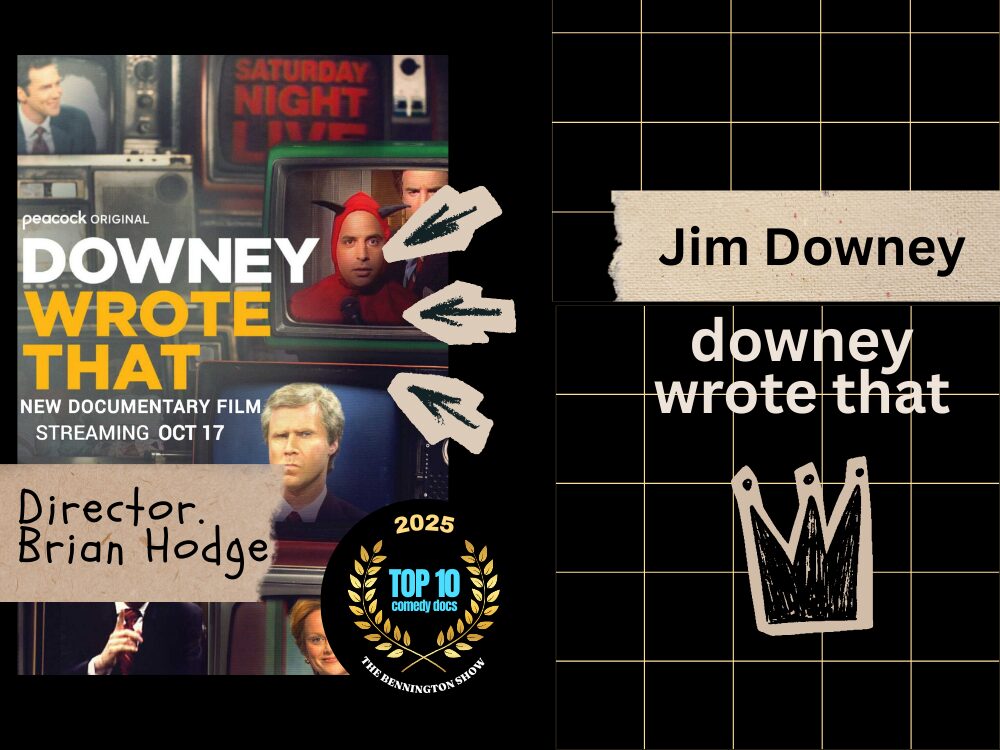
DOWNEY WROTE THAT. JIM DOWNEY
DIRECTOR: Brian Hodge
WITH: James Downey, Adam Sandler, Darrell Hammond, David Letterman, Maya Rudolph, Conan, Lorne, John Mulaney,
Ben Stiller, Fred Armisen, Bob Odenkirk,
AVAILABLE: PEACOCK
Downey Wrote That is a sharp, insider documentary about Jim Downey, one of the most influential and least publicly known writers in Saturday Night Live history, and the voice behind some of the show’s smartest, most controversial political comedy. The film charts Downey’s long tenure at SNL—from the late 1970s through multiple eras—focusing on his role as the show’s chief political satirist. It highlights how Downey helped define SNL’s approach to politics: skeptical, aggressively intelligent, and willing to offend everyone equally. His writing shaped iconic material for figures like Dan Aykroyd, Phil Hartman, Norm Macdonald, Tina Fey, and Will Ferrell, particularly in presidential sketches.
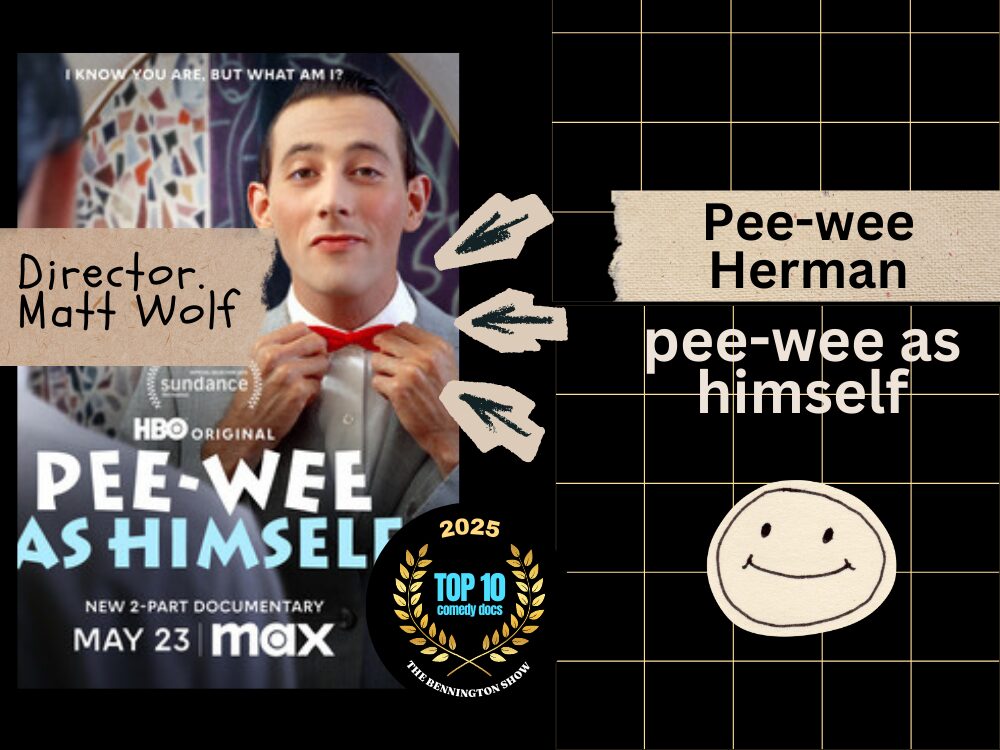
PEE-WEE AS HIMSELF. PEE-WEE HERMAN.
DIRECTOR: Matt Wolf
AVAILABLE: HBO
Pee-Wee as Himself is a candid, emotionally layered docuseries that reexamines Paul Reubens by separating—and then carefully reconnecting—the man and the character he created. The series traces Reubens’ path from avant-garde performance art and Groundlings comedy to the explosion of Pee-Wee Herman as a cultural phenomenon. It shows how Pee-Wee wasn’t just a silly character, but a fully realized artistic persona—precise, disciplined, and rooted in Reubens’ deep love of comedy history, children’s television, and outsider art. At its core, the docuseries explores the cost of total identification with a character. Reubens speaks openly about how completely Pee-Wee consumed his life, leaving little room for a public self beyond the bow tie. When his 1991 arrest shattered the illusion, the series examines how abruptly fame turned into exile—and how Reubens retreated, guarded, and wounded by the experience.
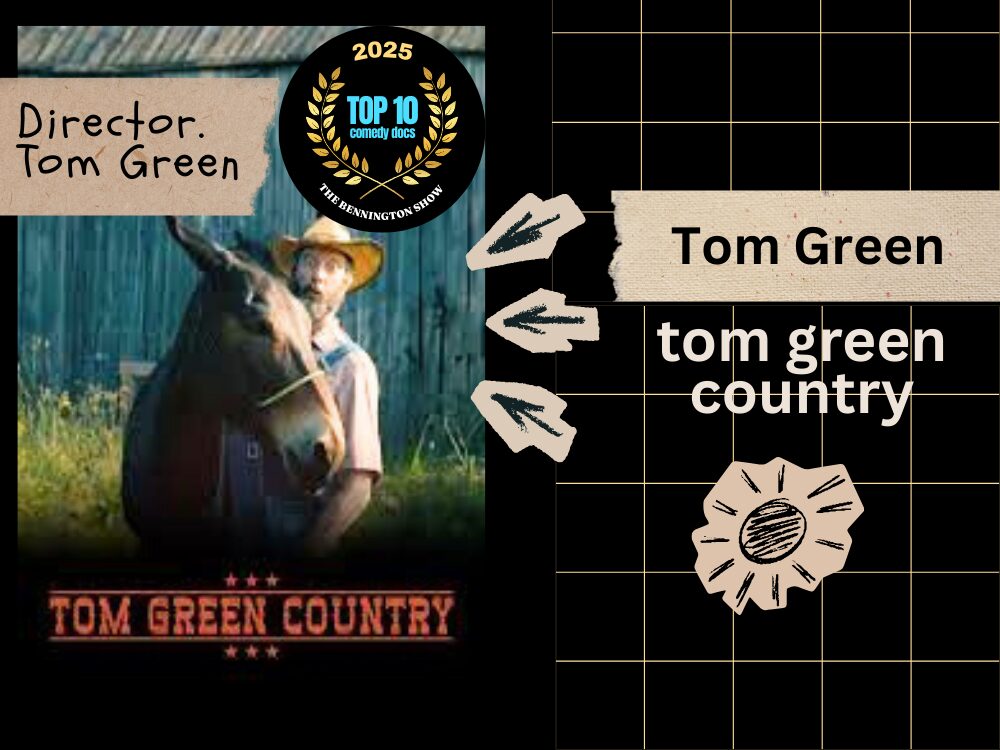
TOM GREEN COUNTRY. TOM GREEN
DIRECTOR: Tom Green
WITH: Tom Green, Mary Jane Green, Richard Green, and more
AVAILABLE: PRIME
Tom Green Country is an offbeat, self-aware docuseries that finds Tom Green revisiting the chaos of his early fame while deliberately choosing a quieter, more grounded life. The series follows Green as he leaves Los Angeles to live in rural Canada, reflecting on his rise as a shock-comedy pioneer in the late ’90s and early 2000s. It reexamines how The Tom Green Show pushed boundaries with absurd, confrontational stunts that helped shape modern prank and internet comedy—often at the expense of comfort, taste, and sometimes even its creator. Green openly discusses how sudden fame, constant escalation, and the expectation to always be outrageous became unsustainable. The series contrasts his former need to provoke with his current interest in simplicity, creativity, and self-sufficiency.
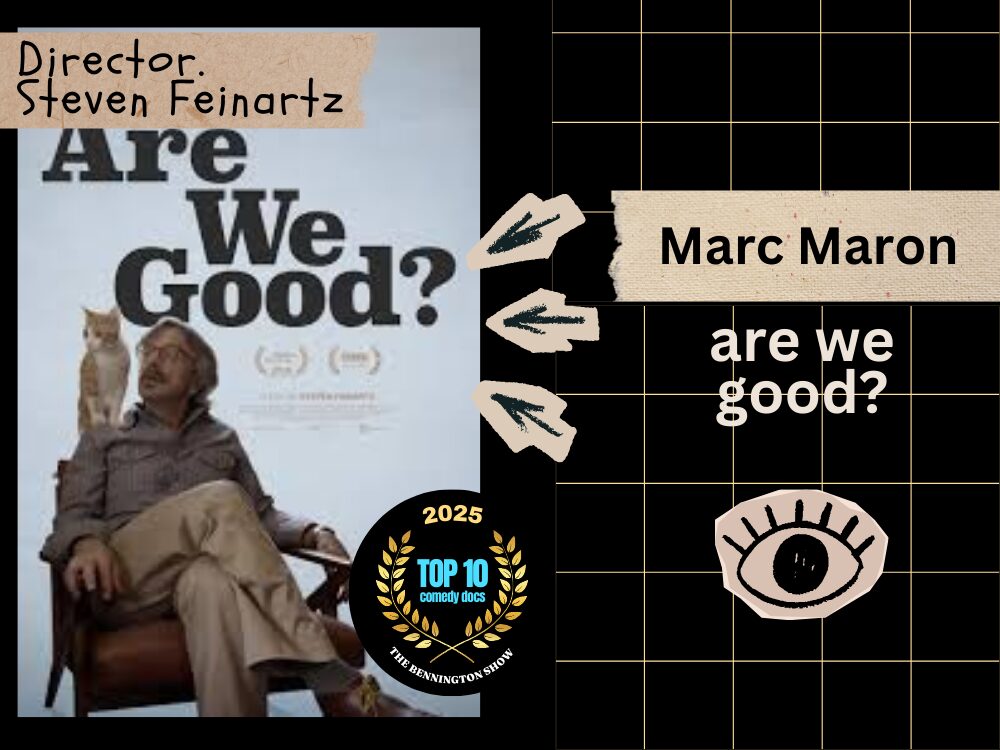
ARE WE GOOD? MARC MARON.
DIRECTOR: Steven Feinartz
WITH: Marc Maron, Nate Bargatze, W. Kamau Bell, David Cross, Gary Gulman, Laurie Kilmartin, Jess Kirson, John Mulaney
AVAILABLE: VOD
Are We Good? is an intimate, emotionally raw documentary that uses Marc Maron’s stand-up comedy as a framework to examine grief, aging, and the uneasy peace that comes with self-acceptance. The film centers on Maron’s processing of the sudden death of his longtime partner, filmmaker Lynn Shelton, and how that loss reshaped both his life and his comedy. Rather than building toward punchlines, the documentary shows Maron grappling in real time—onstage and off—with pain, anger, guilt, and the limits of insight. The documentary explores comedy as a coping mechanism, Maron’s lifelong struggle with self-loathing and control, and letting go of the need to be right.
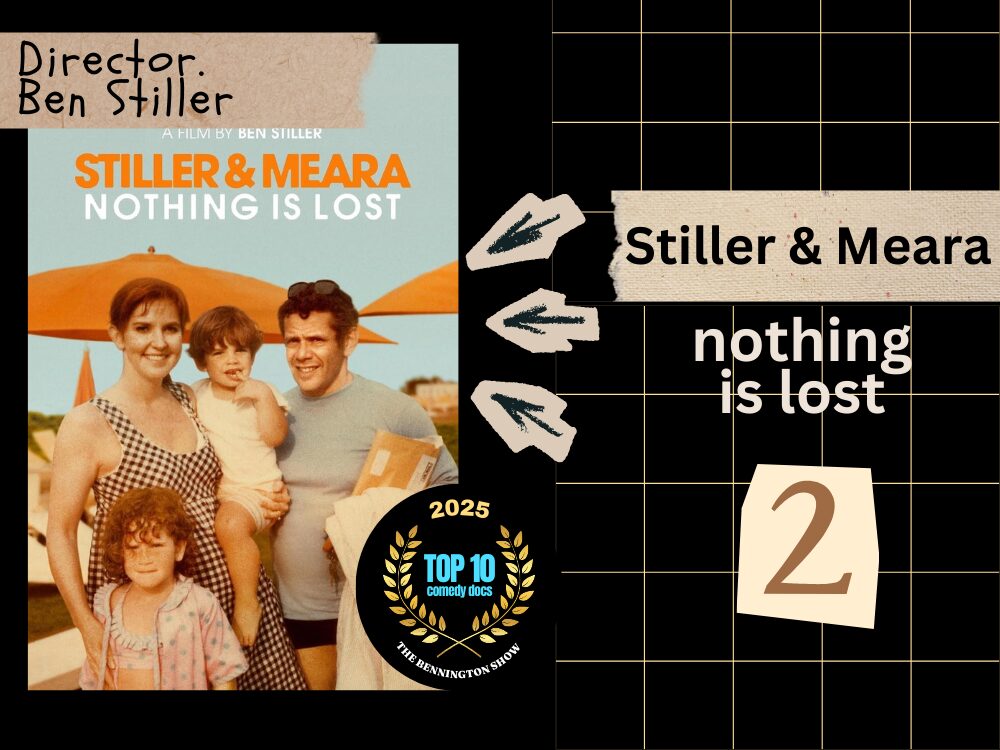
STILLER & MEARA. NOTHING IS LOST. JERRY STILLER & ANNE MEARA
DIRECTOR: Ben Stiller
WITH: Ben & Amy Stiller, Christine Taylor, Jerry & Annes Assistant, Doreen Stiller (Jerry’s sister), Christopher Walken, archival
AVAILABLE: APPLE TV
Stiller & Meara: Nothing Is Lost is a loving documentary about Jerry Stiller and Anne Meara—their partnership as comedians, spouses, and two people who somehow stayed funny and devoted across decades. The film traces their rise from 1960s television variety shows and nightclub comedy to becoming one of the era’s most popular comedy duos. It highlights how their act was built on real differences—Jewish/Catholic, urban/suburban, neurotic/calm—and how those contrasts became both their comic engine and the foundation of their marriage. Interwoven with interviews and archival footage, the documentary also reflects on legacy, particularly through the lens of their children, Ben Stiller and Amy Stiller, who provide perspective without sentimentality.
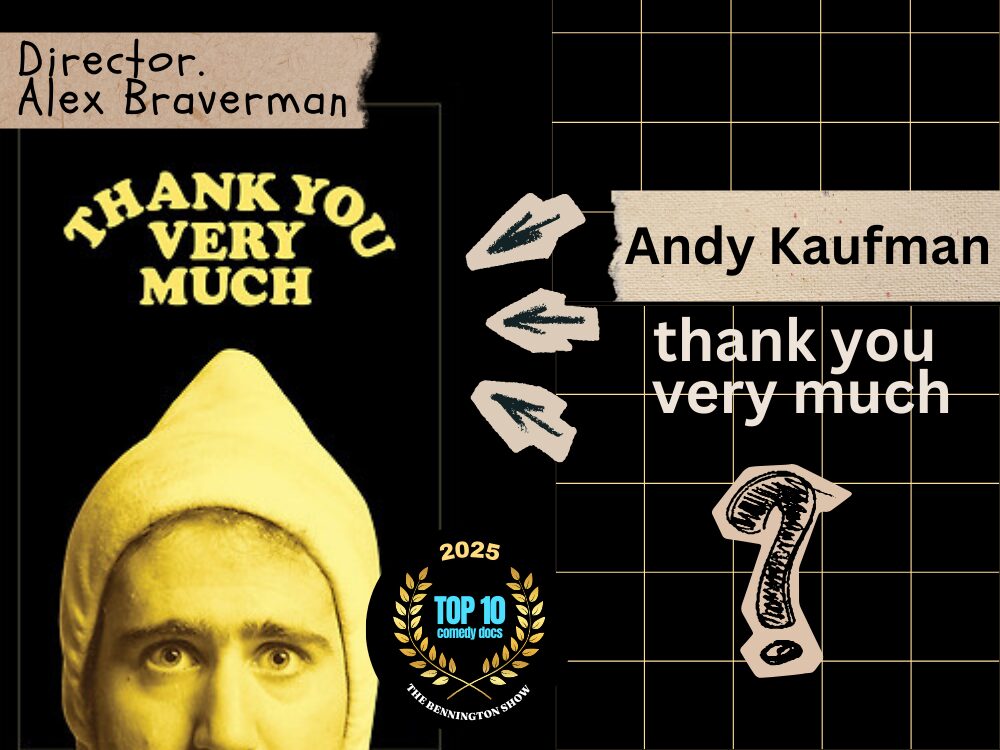
THANK YOU VERY MUCH. ANDY KAUFMAN.
DIRECTOR: Alex Braverman
WITH: Bob Zmuda, Danny Devito, Lynne Margulies, Steve Martin, & Marilu Henner
AVAILABLE: LIMITED THEATER RELEASE
RT has 90% positive reviews of an “affectionate documentary packed with revealing archival material.” The doc details Kaufman’s life and career showcasing his famous stage bits, and rare offstage footage never seen before. The film explores Kaufman’s career through his performances on Taxi, Saturday Night Live, stand-up stages, and professional wrestling, emphasizing how he rejected traditional jokes in favor of confusion, endurance, and confrontation. Rather than trying to make audiences laugh, Kaufman wanted to test them—forcing people to question what comedy was, who it was for, and whether it even needed to be funny.
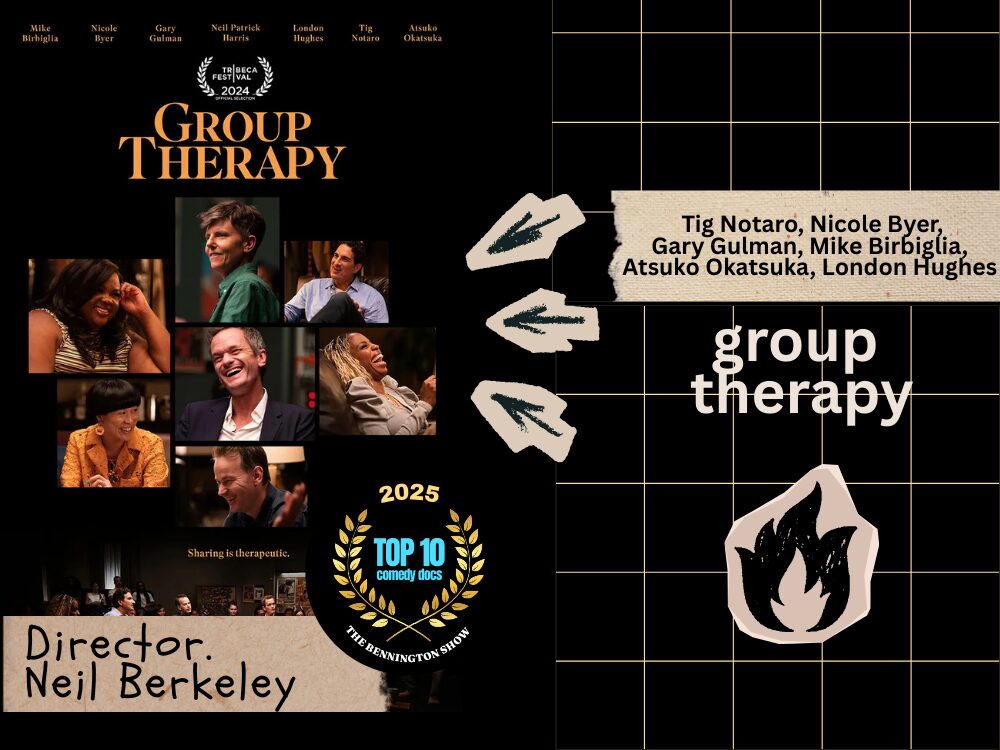
GROUP THERAPY
DIRECTOR: Neil Berkeley
WITH: Gary Gulman, Tig Notaro, Nicole Byer, Mike Birbiglia, Atsuko Okatsuka.
AVAILABLE: LIMITED THEATER RELEASE, VOD
Group Therapy is a revealing, often uncomfortable documentary that brings together a group of stand-up comedians for a collective conversation about trauma, mental health, and the emotional engine behind comedy. The film places comedians in a structured group-therapy setting, where they’re encouraged to talk openly—sometimes reluctantly—about childhood experiences, family dynamics, addiction, anxiety, depression, and the coping mechanisms that led them to comedy in the first place. Jokes still surface, but they’re treated less as punchlines and more as defense mechanisms.
