The 5: Ryan Perez’s Top Five Most Fascinating Guests on “To Tell the Truth”
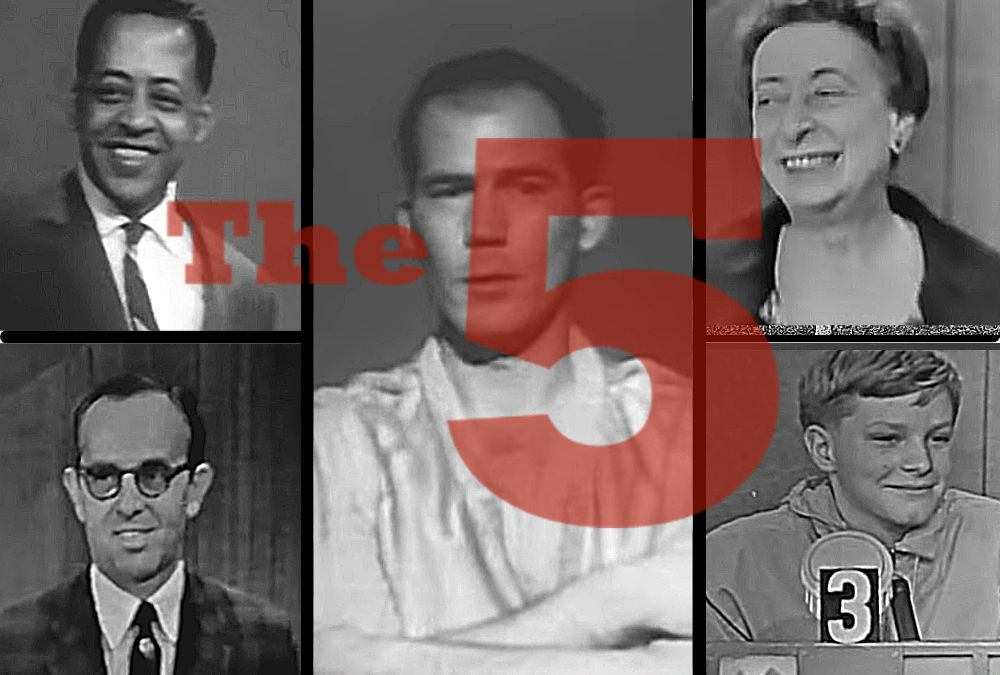
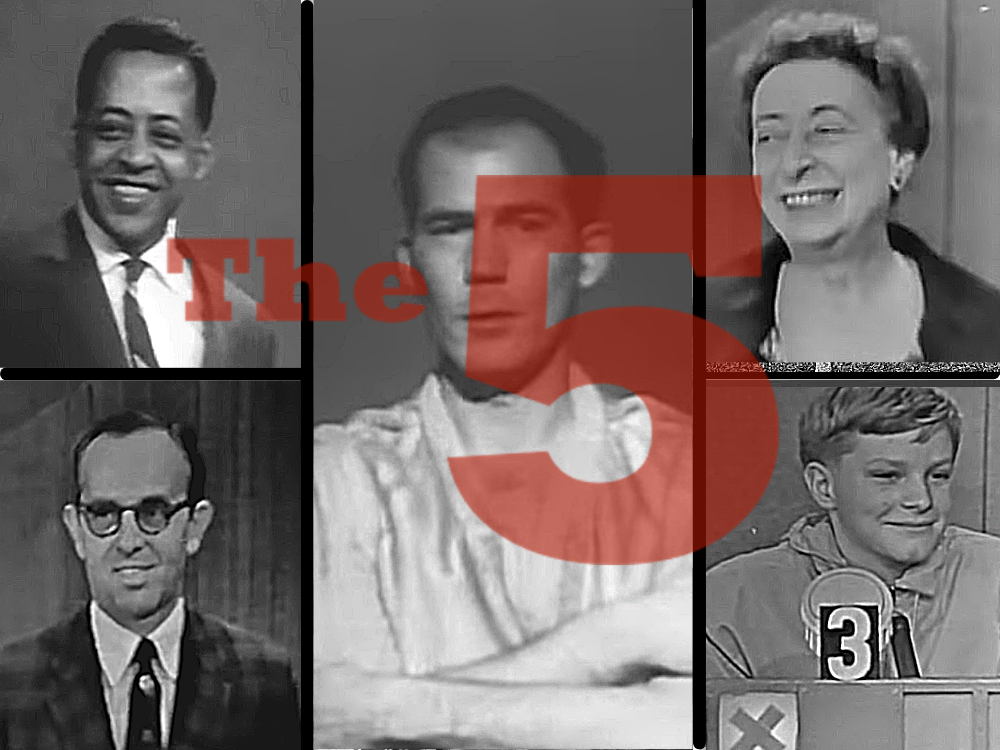
The Top Five Most Fascinating Guests on “To Tell the Truth”
Keep this just between us, but I’m not really a “Prestige TV” person. After a long day, I can’t imagine a less relaxing activity than binging an Emmy-anointed comedy about the importance of empathy or a cool-hued, densely-plotted drama about grief. When I need to settle my nerves, I usually turn to some bit of long-antiquated media where everyone onscreen is stone dead: W.C. Fields tanking a small business through remorseless alcoholism, Marlene Dietrich drowning in Josef von Sternberg’s baroque scenery, low-res YouTube uploads of Sarah Vaughan singing on Swedish television, or an episode of my favorite game show– make that my favorite TV show, full stop: To Tell the Truth, specifically from its original 1956-1968 CBS run.
For those unfamiliar with To Tell the Truth’s format, three guests introduce themselves as the same person. Two are imposters, one is the genuine article. The three are interrogated by an amiable panel, usually a mix of graceful songstress Polly Bergen, the severely midwestern Tom Poston, the brassy Peggy Cass, a maybe-drunk Orson Bean, and the urbane Quiz Show Queen herself, Kitty Carlisle. The show is a product of a bygone era. The panelists are unabashedly well-read and articulate. The guests aren’t celebrities per se, by which I mean they are accomplished in something actually interesting. In some cases, the only surviving TV appearance of a major mid-century figure is their appearance on To Tell the Truth (or the similarly mesmerizing What’s My Line? or I’ve Got a Secret.) Out of hundreds of episodes posted on YouTube and regularly airing on Game Show Network, here are five of the most fascinating To Tell the Truth guests I’ve ever seen
Hunter S. Thompson (author of Hell’s Angels)
Before Hunter S. Thompson became the instantly recognizable Patron Saint of Alcohol, Tobacco, and Firearms (not to mention Adrenochrome), he appeared on To Tell the Truth as a soft-spoken pioneer of the newfangled school of gonzo journalism. As funny as it is to watch mainstream TV wrap its head around Thompson (and vice versa), the real stars of this segment are the two imposters who attempt to throw the panel off Thompson’s scent by sporting the roughest leather gear that is telivisable to the square world. Take note of Number 3’s jacket, which appears, appropriately, 3 sizes too big.
Johnny Piscopo (11 year-old dog sled racer)
Johnny Piscopo (no relation to Joe) is an 11-year-old boy who competes alongside adults in dog sled racing. His story may be your typical ripped-from-the-pages-of-Reader’s-Digest human interest type stuff, but Piscopo is no wide-eyed Disney hero. Not having yet reached shaving age, he’s already a steely-eyed outdoorsman who could intimidate most men of my generation with a stern look. (Bonus: Take note of panelist Don Ameche’s rapid-fire, hard-nosed cross-examination technique. While most To Tell the Truth inquisitors turn on the charm, Ameche is ruthless, machine-like, a killer. The man plays to win.)
Irna Phillips (creator of the soap opera)
Irna Phillips is the prime example of a name I didn’t know before watching her appearance on To Tell the Truth, but turns out she’s one of the most crucial people in the history of TV. This unassuming woman is the creator of As the World Turns, Guiding Light, Another World, basically the entire soap opera form as we know it. Were she alive today, Phillips would undoubtedly be rewarded tenure of an online MasterClass next to Shonda Rhimes or Aaron Sorkin, but in 1958 she had to settle for $250 and a carton of Marlboros, which is an objectively better prize so consider it a win for Irna.
Manny Balestrero, (the real-life “The Wrong Man”)
Of all Alfred Hitchcock’s thrillers, the most deeply-steeped in Catholic guilt is 1956’s The Wrong Man. It’s also the Hitchcock film that stays the closest to its true story origins: Henry Fonda plays Manny Balestrero, a musician charged with armed robbery in a case of mistaken identity. In this episode, the To Tell the Truth panel questions the real Balestrero years after his ordeal, alongside two imposters. The gameplay is somewhat disorienting, like a police lineup where you’re trying to guess which man looks the most innocent.
Barney Hill (alien abductee)
It’s hard enough to suss out the lies on To Tell the Truth when the contestant’s story definitely happened, but what if the “truth” was really… a hallucination? Barney Hill’s appearance is such a case. Barney and his wife Betty Hill were unusual for their time: an interracial couple active in the NAACP, whose 1961 claims of alien abduction predate the proliferation of similar stories in the zeitgeist. To the panel’s credit, they don’t treat Barney like a crank, but take his answers as cold fact. It’s the kind of open-minded, open-hearted trust one looks for in a good therapist. What I’m saying is- I wish Kitty Carlisle were my therapist. (Bonus: watch to the end of this episode to see Bette Davis and two voice mimics try to stump the panel.)