

Ian Hunter Looks Back As He Moves Forward
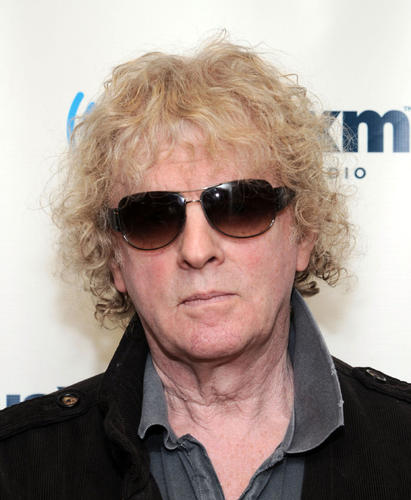 Ian Hunter, one of rock and roll’s great performers is best known as the frontman for the band Mott the Hoople. With Mott he elevated the song “All the Young Dudes” to rock anthem status, and he’s also an acclaimed solo artist and songwriter. He stopped by the SiriusXM studios recently to talk with Ron Bennington about his 20th Studio Album, “When I’m President.” Excerpts of the interview appear below.
* * *
Ron Bennington: Congratulations, my friend, the album is great, and a real rock and roll album.
Ian Hunter: I thought I’d outgrown it, but then the band sort of fired me up a bit. I went out and did twenty dates with the band, and the band started playing with me instead of for me. And it went out of singer-songwriter into band member again.
Ron Bennington: So you really do need to feel that connection with the other guys?
Ian Hunter: Yeah. Well, I wasn’t looking for it but…we did twenty dates and all of a sudden it became one. So I thought we’ll have a go at this and started writing a bit up tempo. And I thought I was passed that, but apparently not.
Ron Bennington: Because when you’re writing alone, it does fall into that singer-songwriter kind of more personal thing. But being in a band puts the music back up there.
Ian Hunter: Yeah, you’ve been on the road so they’re kicking you. You can’t hear yourself, so you just go a bit louder and stuff like that.
Ron Bennington: You were saying you feel like you’ve outgrown it, but the fact that you’re still on the road…still have that connection with your audience, it’s got to feel like an amazing thing.
Ian Hunter: It’s great. I didn’t expect this a few years back. And it keeps you occupied. It’s either that or sitting in the kitchen at my age. Oh my God. I like to keep a bit busier than that.
* * *
Ian Hunter Talks About Getting His Start in the Music Business
Ron Bennington: Well how about when you were a kid? Did you have any idea how long a music career would last? Because to me, you came up being in that kind of swinging London scene in the 1960s. And then when the glam thing broke in the 70’s, it was really one of the more exciting times.
Ian Hunter: Yeah, it was. We didn’t know that at the time. It was busy, but looking back on it compared to now, it was pretty wild.
Ron Bennington: And everybody was playing together in those days.
Ian Hunter: Nah, nah. We kept to ourselves. England’s a bit weird. You know, you can’t play with Jazz people in England, because you know, you’re just a mere rocker and they’re an exalted Jazz player. That’s a big difference over here. You can play with jazz guys over, it doesn’t matter. If they like what you’re doing, they’re fine with it. There’s a snob thing in England, so no, there was a lot of competition and we kept ourselves to ourselves.
Ron Bennington: At what point did you figure out that this was actually going to be a career?
Ian Hunter: I don’t know. I think maybe the second year of Mott. Before then, I never thought I’d ever be lucky enough to be in a band that actually paid a living. I’d had jobs. Plenty of jobs. I’ve had over 40 jobs– semi-skilled jobs in between gigs. Because we used to go to Hamburg, places like that. But you couldn’t get gigs in England. Maybe a Saturday night. Some areas barely draw. So you couldn’t support yourself in England. I was already married with two kids, so I never really thought it would ever happen. But I guess desire is a big one, you just keep hammering away.
Ron Bennington: Yeah, something keeps driving you back to it, right?
Ian Hunter: Now they ask me– the young kids– and it’s like, it was one word. Desire. That’s it, right there.
* * *
Ian Hunter Starts Mott the Hoople.
Ron Bennington: Just that lust for that feeling, that intense need to be up there doing it. And then once you were in Mott the Hoople, there’s a band that for whatever reason just all the elements were there. And I don’t know how much of that was planned….
 Ian Hunter: Nah, it’s flukish. Mick Ralphs had gone to Guy Stevens who was at that time head of A&R for Island Records. Best label in England at that time. And Guy had been impressed with Mick. Guy had kicked him out a couple of times, but Mick had just banged on the door and walked straight back in, like, “listen to our stuff.” And he liked the band. They were covered in hair. Guy liked people who nodded their head violently and they had to have lots of hair. And he liked the band, but he didn’t like the singer, Stan (Tippins), who was like a bit of a white soul singer. So Stan became their tour manager and then they started looking for a front man. And I got it basically because, they tried everybody else and nothing was happening. They got piano players who couldn’t sing. Singers who couldn’t play the piano. I was pretty crap at both, but I could actually function. But Guy was into Sonny Bono, Bob Dylan at the time. He liked that phrase kind of thing. And that’s the only way I knew how to do it so I was in. Well not totally in, but we’ll try him for now until something better comes along. You know, that kind of deal.
* * *
Ian Adds Showmanship to Mott
Ron Bennington: And then you also had whatever that extra factor was of people wanting to focus on what you were doing. I mean, it’s one thing– you’re a great singer and you’re a great songwriter, but also you are an entertainer when you are on stage.
Ian Hunter: When I started with them I was sitting at a keyboard on the side. And I found that– I’d been brought up on Jerry Lee Lewis, and Screaming Lord Sutch, people like that. And I found just to myself that I wanted to be stage center. This wasn’t enough. And then one night we were playing a place called “Letchworth Youth Club” and the lights had been fixed in the middle. There was nothing on me. And I stopped the show and I said, look, I want the lights on me. And this was like– you don’t do that– in the 70s in England. Big head, you know. But for some reason I said it and it turned around. The gig went great. And I was learning how to control an audience. And I learned a lot off Jerry Lee, the arrogant factor, you know, you’re running it. They’re the masochist, you’re the guy that’s in charge. And then I started playing guitar and getting in the middle, and Guy Stevens loved that ’cause now we had a front man. Before that it was just like, you know a faceless sort of thing.
Ron Bennington: There was a time, before the “All the Young Dudes” album, you guys were actually talking about breaking the band up and not being together?
Ian Hunter: We did, we broke up in a gas tank. They were converting those gas tanks into clubs in Switzerland. And Switzerland is not a very fun place to play. I mean, people are very very nice and then you’re playing in these gas tanks. So we split, went back to London. And then Pete [“Overend” Watts] looked David [Bowie] up for a gig on bass– Pete Watts our bass player– and David said, but you’re in Mott. He said no, we’ve split and David wouldn’t have it. Turns out he was a fan of Mott. And so he offered us “Suffragette City”. And then when we wouldn’t do that, he offered us “Dudes”. We were like, fine.
Ron Bennington: We’ll take it.
Ian Hunter: Well yeah. I mean if you’ve ever sat in a room and heard a hit before anybody else ever heard it, and you know it is, that’s a great feeling and it doesn’t happen that often.
Ron Bennington: But you also turned down “Suffragette City” which also could have been ‘the song”.
Ian Hunter: I don’t think so. I thought it was a good song, but I didn’t think it was a great one. We had stuff like “One of the Boys”, “Walking With a Mountain” at that time. I’ll put it in a class with them. They were good songs, but they weren’t great ones. That was a classic– the one David gave us. “Dudes”. Just sat there and played that one on acoustic guitar. I mean you can do that thing on anything. It doesn’t have to have all the bells and whistles that a lot of songs do have to have. It was just a great song.
Ron Bennington: But also, the thing about this song– to me– that always worked; is the way that you, on a studio album, are treating it as if it was live, talking to a live audience that obviously isn’t there. I mean that’s really brilliant.
Ian Hunter: That was David again. “One of the Boys” and “Dudes” were done in two evenings at Olympic Studios in Barnes in London. Halfway through the second evening, all of a sudden he turns around and goes “One of the Boys” is the single. We’re looking at him like ‘you’re out of your mind. What are you saying that for?’ ‘Well, you know it goes on at the end. It just goes round and round and round and round, nothing’s happening.’ And so a couple of nights before– we used to have what was called a ‘heckler’s ten seconds.’ Some asshole at the back, “you suck” or whatever. So we’d get his mates to bring him down the front. And we’d all put a bottle of beer over him. And this poor kid came down and he got a brand new suit. But I poured the beer over him, and we were in that building that night till four in the morning, and he was still outside waiting for us when we came out, and I thought, this is going to go one way or the other, but it went the right way, it was fine. So I just did that rap again on the back end and David loved it. I didn’t see what the fuss was about ’cause I just did it on the gig.
* * *
Mott the Hoople Comes to the States
Ron Bennington: When you came to the states, were you surprised? Cause not everybody gets to make that trip over and get accepted. Some people – it’s a carpet for them and other people it’s a wall.
Ian Hunter: I’ve found that most bands– there were certain kind of bands that went down well in Europe, but didn’t quite go down that well in places – like Germany; a lot of blues guys, a lot of those kind of Jon Hiseman type people, they do great in Germany; not necessarily do that much over here. We were doing okay in Europe but we were doing great here. So it seems that the Americans– I guess we were more looking towards America– we were influenced by, you know, Dylan. Mick loved Stephen Stills, people like that. I think we all loved Joe Walsh, “Barnstorm”. We liked Nils Lofgren, Grin, the original band, we liked all that kind of stuff – Love. So I guess our music would be more accepted here. I remember doing Bill Graham, the Fillmore West, and Albert King top of the bill, Freddie King bottom of the bill, us in between. And they wanted a white guy in the house, but even they were like ‘yeaaaaah, that’s right.’ We got an encore but it was one of those ‘yeaaaaah that’s right.’
Ron Bennington: But that had to be thrilling for you. Particularly because you had waited so long for that opportunity and then come over here to the States. Were there pockets where Mott was bigger than other places?
Ian Hunter: Yeah, we weren’t big on the coast at all. It would be Cleveland, Memphis, places like that.
* * *
Ian Hunter’s New Album
Ron Bennington: You’ve got the new album out, and even though it’s a studio album– it has a great rock and roll live feel to it. How are you able to get that sound?
Ian Hunter: I don’t know. (Laughs) It’s just the guys I’m playing with. I didn’t tell ‘em what to play or anything like that. We get in this room where I know the engineer. Studio’s good, and four days later, you’ve got yourself a record.
 Ron Bennington: Four days? You cut this in four days?
Ian Hunter: Me and Andy York went back and mixed it– another nine days– but yeah, four days the band– the album was done. Most of the vocals were all done in four days.
Ron Bennington: That is pretty amazing and this is one of those albums that is– it does feel like you could have taken this– put it out in the 70’s, early 80’s. It’s got a timeless rock and roll…
Ian Hunter: You got your rhythm section. That’s what you need for rock. I mean, stays slightly behind the beat in the same way that Charlie Watts plays, that kind of behind the beat feel to it. It’s the only way I know how to do it.
Ron Bennington: The other thing I think about an Ian Hunter song is, the lyrics are there. You write a lot of personal lyrics, and in this you’ve got a lot of historical lyrics which I don’t hear much younger guys doing– write about the old west, civil war. Everything is open to you.
Ian Hunter: Well, it’s got to be. Younger guys can still write about boy-girl. I can’t do that, so you’ve got to find something else. So you write about religion or politics. And you have a great history and it’s relatively recent. I was born ‘39, Wyatt Earp died ‘29. That’s how close your history is.
* * *
Ian Talks About Meeting Mick Ronson
Ron Bennington: You brought up Mick Ronson who was a great friend of yours, great collaborator and really one of the great rock and roll people of all time. How did you meet up with him?
Ian Hunter: I met him on the “Dudes” album. I met him briefly before– a mate of mine, Miller Anderson told me I met him in ‘69 but I don’t remember that. I met him when David was producing the “Dudes” album, and Mick was there. And he was working class and I was working class and David was like from another planet, so me and Mick just started hanging out and it just went from there.
Ron Bennington: Was Mick confused by the whole Bowie Spiders from Mars? I mean you’re saying working class but the next thing..the hair, the clothes…
Ian Hunter: We were working at Trident, and you know, David, great mover, and he knew he had the gay thing sewn up, but Mick comes from Hull. Mick’s mom and dad George and Min were not too fond of this, kind of, you know. And I remember Mick coming out– they had a meeting downstairs, we were upstairs. And Mick came out bright red. And when he was bright red, it meant he was angry– not angry that often. His nose used to flare and he’d go bright red… (mumbles) ‘I ain’t no fucking….’ (Laughs). Mick is just fun. But he was thinking of his mum and dad, you know.
Ron Bennington: But the weird thing was, that suddenly was very attractive to women.
Ian Hunter: Well, David, I saw David in the 60’s when he had his perm. And he was – do you have a Revox? And he’d just sit there with an acoustic and he’d do all….but again he’s a performance artist. That’s what David was. And the striking thing about it was, he was coming off as ultra-fey, but there was a mile long queue to the dressing room after the gig and it was all women.
Ron Bennington: But Mick adapted to the whole thing, and then after he broke off with Bowie, he started to work with you more and you guys were on and off for the rest of his life. What a unique guitar sound– what a fantastic sound that he had.
 Ian Hunter: Well he was classically trained. He was a violinist and pianist, you know. It’s just the quality of what he…he was a strange player. He would think a solo before he actually played it. And he wasn’t that fast as a player which I thought was a good thing. So he would imagine the complete solo – like you would write a song, he would write the solo before he picked up the guitar. Now when he picked up the guitar, it would sound revolting. Because he was trying to get from his head to his hands. And I’ve walked out of the room. It’s like disgusting. And all of sudden, you start hearing this pure thing coming out. Maybe sometimes, it took an hour. He was awful on sessions. People didn’t know what he was doing. I remember Meat Loaf – what the f…?? Because Davy Jones would come in and wave his hand up and down the keyboard, no problems. But Mick wasn’t like that. He wrote the solo in his head and then converted it to the melody that he would play. So he had a song within a song. Which to me is a great idea.
Ron Bennington: Oh absolutely. And I honestly – if you go back and listen to the early Bowie stuff without that guitar – I don’t know if it would be the same place.
Ian Hunter: No. I don’t know.
Ron Bennington: And everyone always sees of course, David as a solo act because just the way it’s named of course.
Ian Hunter: No, it was a two-pronged attack. It really was. Because most of the audiences were working class initially and Mick…..it was the 2 prongs. It was the 2 things. I mean (Tony) DeFries knew that. DeFries wanted to make him the next Bowie when David retired. He then started making Mick the front man. The only thing was – Mick wasn’t a front man. He was a side man. I mean the thing with Mick was – he couldn’t take the guitar through monitor systems. He hated that. He was a purist. He would have to hear it straight from the amp. And you can’t have an amp behind you in the middle of the stage on the front mic. (laughs) Because it’s going to leak. So he was a side man. He was a side man that everybody thought would be a great front man.
Ron Bennington: Right. Yeah, because…
Ian Hunter: He looked gorgeous. And he played great.
* * *
Ian Talks About His Influence on Rock and Roll
Ron Bennington: There have been so many bands too that have looked to you and said – this was our influence and the interesting thing is how many different directions those bands will go in. Where The Clash said – oh, we’re a Mott the Hoople band. Def Leppard said – we’re a Mott the Hoople band. And it goes on and on like that. Is that surprising to you when you meet these musicians?
Ian Hunter: No. Because when we started, rock and roll was just rock and roll – before it got departmentalized. Duran Duran were huge fans of Mott the Hoople. It’s got nothing to do with what they do, but then it was just rock and roll.
 Ron Bennington: But it was also about the fact that everybody would come together for those shows as well. Because you said there would be a gay audience there. Somewhat of an inner city audience – whatever it tended to be. When do you think rock and roll broke off and started going in so many different directions?
Ian Hunter: I don’t know. I thought it was a media thing. It was like the new romantic…and then all of sudden, we had this Prague thing going – and then it was progressive and then it was…and now it’s classic. We’ve got all these different boxes that people are in. When I grew up – I mean it was Jerry Lee Lewis, Little Richard – Elvis was kind of a bit on the pop side – weren’t too keen on him, but he was great. Chuck Berry. We all loved the Everlys.
Ron Bennington: What’s always great to me is when I listen to your music, you can still hear those same influences in the music.
Ian Hunter: Well I take that as a great compliment. I really do. It’s nice that you would say that.
* * *
Ian Talks About Mick Ronson’s Death
Ron Bennington: There’s so many people that – yeah, they’ll go out and play certain hits for nostalgic purposes, but this is new stuff. And it’s got just as much passion as any other point in your career.
Ian Hunter: That’s the only way I know how to do it. I’ve had bad times. I’ve done bad records, but I’ve always gone in with the best of intentions. Sometimes the material left a lot to be desired. But over the last 10 years, I’ve really liked what’s going on – ever since Mick died – and I think that has a lot to do with it to be honest with you.
Ron Bennington: That you maybe were just cruising a little bit.
Ian Hunter: Hey, it was a kick in my ass big time. To be next to somebody – to be that close and they’ve got it and you’ve haven’t and there’s nothing you can do about it. And he was cooking actually. He was producing Morrissey. He had just got a deal with Epic. So, no reason on Earth for him to leave, you know what I mean? But I was off the roll. But then really, I just thought – you’re here to do something and you better do it properly because this is bullshit what you’re doing at the moment. And I think it kicked my ass. And the last 4 or 5 records have been great.
Ron Bennington: So, that was the wake up call that maybe that you needed to just treat this all as if there’s some preciousness to it.
Ian Hunter: Oh yeah. Because it was like – whoa. This is like your brother dying or something. It was close. He rang me up in 1990 and told me. And it was like…it never…I mean you know with your mom and dad, but I didn’t expect anything like that ever. I mean he was a bit of a lag, but not that crazy. And then it was 2 years of hell.
Ron Bennington: Well the legacy is there.
Ian Hunter: The legacy’s there. Yeah.
…
Ron Bennington: And I have the chance to tell you – I just think one of the great songwriters of all time. Obviously, one of the great front men of all time. And I’m just glad that you’re still out there doing it, man.
Ian Hunter: Well, I shall go away dutifully refreshed by those remarks.
===========================================================

You can hear this interview in its entirety exclusively on SiriusXM satellite radio. Not yet a subscriber? Click here for a free trial subscription.
.
You can learn more about Ron Bennington’s two interview shows, Unmasked and Ron Bennington Interviews atRonBenningtonInterviews.com.
