

Chris Moneymaker Going All In
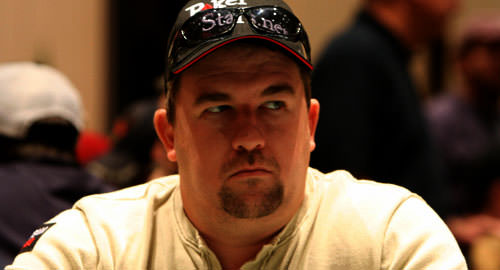
 Chris Moneymaker is a professional poker player who became an international celebrity when he won the 2003 World Series of Poker and 2.5 million dollars. He had never played in a live tournament before that series, and in fact, qualified for the tournament on PokerStars, an online poker site. He recently stopped by the SiriusXM studios to talk with Ron Bennington about the new documentary “All In: The Poker Movie” which focuses on the poker renaissance in the United States and Internationally. Excerpt of the interview appear below.
Ron Bennington: Chris, you are considered almost ground zero for how big poker got in America.
Chris Moneymaker: Yeah, a lot of people credit my win in 2003 with creating the online poker boom, and the poker boom in general. We went from 839 players in 2003 to 2,500 the next year and all the way up to 8,500 a couple of years later.
Ron Bennington: Now of course, poker’s a skill game. Skill and luck. But you said before you came into this, you were pretty much a degenerate gambler. You had a gambling problem.
Chris Moneymaker: I definitely did without question. It was mostly sports, that was my crutch, but if I could bet on anything I would. I think I just slid quarters down a railway just a minute ago for twenty bucks.
Ron Bennington: So were you like that as a kid? Or is this something that you picked up on.
Chris Moneymaker: I was a hustler as a kid. I played pool in the basement, played foosball in the basement, we shot dice in the basement from the age of probably eleven years old all the way until college. I didn’t figure out you could bet on sports though, until my sophomore year in college. And that was really the downfall of my gambling career.
Ron Bennington: Now how is gambling on poker different from gambling on sports.
Chris Moneymaker: Well sports you’re giving up ten percent off the top and that’s going to be tough to overcome. In poker, you control the action yourself of course. It’s a mathematical game. It’s a people game. So if you put enough effort and time into it, you can actually be better than your opponent. And whoever the better player is, is always going to win.
Ron Bennington: Always going to win? You mean long term?
Chris Moneymaker: Long term. Look at it this way, if we’re flipping quarters, you give me 52% of the edge, tonight you might beat me. We flip five hundred times, you might beat me tonight. If we flip a million times, you’re going to be in a lot of financial difficulty very soon.
Ron Bennington: So, you walk into a room and it’s just me and my producers playing poker. How long is it going to take you before you own everybody at the table.
Chris Moneymaker: Again, it’s really going to depend. I mean, you all might beat me that night. But if I come back the next night and the next night and the next night, eventually you’re going to ask me not to come back anymore.
Ron Bennington: So eventually you know you can turn it. Is that what makes it a skill game? Is that the thing that changes it? That you’re competing against us instead of the house.
Chris Moneymaker: I’m not competing against the house, I’m competing against other guys and I know the percentages better than you do. I know what you’re going to be doing…people fall into patters. Whether you want to or not when you flop top here, you’re going to do something, when you have air you’re going to do something, you’re going to check raise when you have really big hands a lot of times. People will just fall into these general patterns. And every once in a while they’re going to try to be tricky…but for the most part, people are creatures of habit. And they’re going to look at their cards the same way. They’re going to act differently when they have aces then when they have deuce seven. And you just pick up all this other information, plus you use the math. The math information, you know, what percentage are you to get a flush and how much are you betting to keep me away form it. And using the math edge slash my people reading skills you’re eventually going to be in trouble.
Ron Bennington: But do you find yourself sometimes thinking about other things at the table?
Chris Moneymaker: Oh of course. You’re human, that’s part of it. You’re sitting there for twelve hours– I’ve got a mental coach that tries to keep you focused on the game. After sitting there for twelve hours five days straight, your mind tends to wander. You watch when the basketball game is, you look at the waitress delivering the drinks. You do a lot of different things that are not paying attention to the poker table. And you gotta focus. I’ve got a rubber band that I wear on my wrist sometimes and when I lose my focus I flip it. I have to get up and walk around and do some meditation and do some visualization to make sure that I’m focused on what’s going on at the table. Cause even when you fold it’s important to pay attention because that’s when you pick up all your information on your opponents.
Ron Bennington: So it’s a science for you and you’re training for this all the time.
Chris Moneymaker: It’s a job, and yeah, I’m training all the time. For literally about three years, I didn’t train. I didn’t put any time into it. I sort of had the game figured out, I thought. But the problem is, is poker evolves, poker changes. Different strategy develops to conquer what’s currently going on. So every six months there’s a new way to….you only get two cards. So I used to think there’s only so much you can do with two cards. But that’s really not the case. There’s so many creative ways that you can play hands. Different game theories, different meta-games that you can play with people. There’s a lot that goes into it that you don’t really realize. A prime example, if we were having this conversation in 2004, I could teach you how to play poker in about an hour to two hours, send you off to the casino, let you play one three, and you would come back and you would make money if you just did what I told you to do. Now, that same thing would probably take me a day, day and a half to teach you that, to go down there and actually come back with money.
Ron Bennington: When you hit, and you went from being this guy who was in debt, running away from people that you owed money to and working regular jobs… When you hit, and it was for 2.3 million dollars, right…
Chris Moneymaker: Two point five.
Ron Bennington: …did that also create new problems? Just suddenly getting that fast success?
 Chris Moneymaker: Actually…well obviously it helped a lot of my problems. I went back and I payed all the bookies that I owed. It was like 2,000 here or there so it wasn’t big money but for me, back then it was big money. The thing is, my past actually saved me when I did win the money. Because a lot of people– you hear all these stories about lottery winners who win the lottery and two years later they’re busto. They’ve lost all their money. Well I’ve been busto. I’ve been busto a lot. And when I won all that money I decided, I don’t want to be busto anymore. I’ve eaten Ramen Noodles, I’ve skipped meals so I can bet on whatever game is that night. I don’t want to go down that road anymore. Cause I used to gamble just to have money. That’s why I gambled. Now that I have money I’m making sure I’m being smart about it and playing the games where I have an edge or at least a 50/50 chance of winning. And I just play really small. A lot of people when they win poker tournaments they go and play these huge monster cash games where they have hundreds of thousands of dollars of swings in a night. I don’t play in those games. I play in games where I pretty much know when I sit down, I’m going to make a few thousand dollars that night. And if I were to lose I’m going to get hurt for three or four thousand. That’s going to be it.
Ron Bennington: One of the things that comes up in this film is how it affected the poker business when the online sites got shut down. What was your feeling about that?
Chris Moneymaker: Well obviously it hurt. I played about every day. It was definitely a switch at first. I thought it would be a short term thing. I thought it would be gone for a month and that would it but then reality started sinking in that this could be a long term thing. It not only cost a lot of poker players– I had tons of friends who had to move out of the country– I’ve got other friends that…. The problem is, when you’re a professional poker player and you get put out of work– I’ve got one friend who plays a mix game. And you can’t go to a casino and just find this mix game. So he was basically put out of a job. Now he’s been doing this for six years. And he can’t just get up and move to another country. Well I guess he could, but he didn’t want to move to another country. So he’s got to go find a job. But he has nothing on his resume for six years. He gets no unemployment, no help from anybody, he’s just out of a job. And good luck. And I’m sure there’s many people like him out there.
Ron Bennington: This really blind sided almost everybody when it happened, didn’t it.
 Chris Moneymaker: Oh of course. I was moving into a new house and I went to go check to see if the internet was working. I logged on, and popped up, and all of a sudden I see a Department of Justice screen instead of PokerStars. I’m like going, okay that’s not good. That’s bad news. It didn’t only affect poker players, all the shows shut down. So everybody working on the poker shows, they all shut down immediately.
Ron Bennington: Because that’s where the ad money was coming from…
Chris Moneymaker: Yeah, their ad money came from the online shows. Poker affiliates that were making tons of money by drawing income from the poker sites, all of them, immediately overnight lost their jobs. So it definitely affected more people than a lot of people realized.
Ron Bennington: When you’re playing online, you can’t read other people though, right? Do you just read their style of play?
Chris Moneymaker: There’s programs, actually, out there that track how often you play your hand. You play 20% of your hand, you raise with them 18% of the time, you three bet 7% of the time. It turns from a reading faces game into reading your patterns. And people fall into patterns. So I can tell if someone is three betting me 15% of the time, which is a really high number, I know that if I four bet them, they’re going to fold the majority of the time. Cause it says, ‘will fold a four bet x amount of the time’. So you go into a hand knowing what a person is going to do before he does a lot of the time.
Ron Bennington: Everyone remembers when you won. I’m sure you’re forced to talk about this every time you sit down, every day of your life.
Chris Moneymaker: Most interviews, yes.
Ron Bennington: And they want to go over each hand with you, and what you were doing. Does that become frustrating?
Chris Moneymaker: No, I don’t want to say frustrating, but the only thing that gets old after awhile is, whenever you meet anybody…anybody..the first thing they want to talk about, when they find out who I am, whether they watch poker or not is– poker. Outside of my wife and two or three friends, I can’t go and have a conversation that doesn’t involve poker in some way.don’t talk poker to me, I don’t want to talk poker. I work poker eight nine hours a day, I don’t want to sit down and talk another two hours about poker with someone that I just met.
Ron Bennington: The film also shows that a lot of this is going international, that you guys are going overseas. Does that change the way you play the game? Is there local customs that are tougher to read?
Chris Moneymaker: It’s definitely easier to read white American males than anything else. Women are a lot more difficult to read but they’re a lot more easier to run over on the poker table as a general rule. Maybe not on the higher level but on lower levels.
Ron Bennington: Why do you think that is though?
Chris Moneymaker: I think its just the machismo personality. I’m a guy so I guess I can just relate more with a guy. The postures and reactions guys have. Women have different reactions. My wife can always tell when I’m not telling the truth. She can read me pretty well. And I have a problem reading women. I don’t know what it is. I always know that if I’m playing poker with a woman I just know that I’m probably going to try to run her over, and until she has a backbone and stands up to me, I’m going to raise her every time. That’s just sort of what I do in poker. Unless it’s a woman that I know. There’s a lot of very successful good woman poker places and you don’t mess around with them. You treat them like everybody else on the table. But as far as going overseas, people again, are creatures of habit. So it might be a little bit different. Like when you go down to Brazil, for example, in America people raise, two and a half to three times the big blind, as a general rule. When I first got down to Brazil, people were raising eight or nine times the big blind. I’m just like woah, what’s going on. So I talked to a Brazilian pro that I know, and I was like, dude, what’s going on down here, they’re making it nine times the blind! He’s like, yeah that’s what they have to do down here because if they don’t everybody calls. That’s what they have to do to get it down to one or two people. Now it’s changed a little bit since I went down there, but that’s just the style they play. You go up to play in Northern Europe– they will just continuously fire at you nonstop. Their game is actually what has changed poker more than anything else, is their aggressive style. They’re constantly firing at you, they’re constantly betting at you. You go over to Asia, I’ve played in Macao, they have superstitions over there where they’ll play a deuce three because it’s lucky. That’s a lucky sign for them so they’ll always play deuce three or three six. They are very superstitious when it comes to their cards. So they will play cards that you normally wouldn’t play just because their belief system is based on luck.
Ron Bennington: So do you think that’s where it’s going now? More overseas?
Chris Moneymaker: Well it already is. I leave for Italy next week and then I go to Monte Carlo next month. It’s all overseas right now because it’s legal over there. In the land of the free we can’t do it. But over there, it’s perfectly legal. Every other country except maybe like Iran, you can play online poker. Maybe there’s a few other exceptions but it’s definitely exploded over there. Right now yeah, you’ve got to go over there. Eventually it’s going to come back and online poker will open up. Once online poker opens over here in the US there will be a twenty four hour poker tv show. There’s going to be poker all over tv. It’s going to really explode. But until that time we’ve got to fly somewhere else.
Ron Bennington: Chris thanks so much for coming in, and we’ll see you next time through.
========================================
You can hear this interview in its entirety exclusively on SiriusXM satellite radio. Not yet a subscriber? Sign up for your free trial subscription here! For more information on Ron Bennington Interviews, click here.
Follow Chris Moneymaker on twitter @CMONEYMAKER and visit his website chrismoneymaker.com. For information about the documentary follow @AllinPokerMovie or visit allinthepokermovie.com. The film opens March 23 and will be available on itunes on April 24, 2012.
