

John Irving Talks
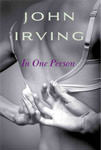
John Irving is one of our greatest living authors and an Oscar winning screenwriter. It would be impossible to chose what his best known work is. “The World According to Garp”, “The Cider House Rules”, “A Prayer for Owen Meany” are only a few of his great works. In 2012, he stopped by the SiriusXM studios to sit down with Ron Bennington to talk about his newest novel, “In One Person.” We never got the chance to post this interview earlier in the year but it was one of our favorites, so here are excerpts from this exceptional interview.
* * *
Ron Bennington: As I was reading your book, so many of the themes were playing themselves out on the national news every night, with Barack Obama coming out in favor of gay marriage, and Mitt Romney NOT so much in favor of gay marriage as well as some high school bullying taking place which reminds us all of one of your main characters.
John Irving: You know what’s sad to me about that is I wish I could take credit for being timely. But you know, if disappointing behavior is what makes a new novel timely, you might be lucky in the book sale department, but you really can’t pat yourself on the back about it. You have to remember that I already wrote about this subject. When I finished “The World According to Garp” in 1978 I imagined I was done with the subject of our intolerance for sexual differences. I couldn’t imagine that our intolerance for sexual differences among us would persist even through the rest of the seventies. I would have thought by now that “The World According to Garp” itself would be looked on as kind of an angry and cynical relic of reaction to the immediate disappointments following sexual liberation as not being liberated enough. I had no idea that I would be writing another novel, a different novel to be sure, but another novel on the theme or on the subject of our intolerance of sexual differences. So it was with some anger and disappointment and a feeling of “oh, not this again” that I began writing this book. It was in my mind for as many as seven or eight years before I began writing it in June of 2009. It sat around for a while maybe I hoped it would go away. So, that there has been a cavalcade of gay bashing among the Republican candidates for the presidency, that there has been a resurgence in reopening the abortion debate, is sad to me. And it’s sad truly as pleased as I am with Mr. Obama’s announcement, his endorsement of gay marriage, it’s sad to me too frankly how long it took him to do so. And I was a little sorry that Joe Biden was put in a position to apologize for jumping the gun. I say “good for you Joe.” If Joe sort of pushed the president to stop procrastinating on this subject and got him to respond a little sooner than he might have, I don’t think Joe should be expected to apologize for anything.
Ron Bennington: And like you said, Joe actually himself didn’t exactly say this in 1978
John Irving: No no, okay, yeah
Ron Bennington: it took him to 2012 before, he, you know
John Irving: And did you think too that when he first said that, didn’t he sound a little exasperated to you? I mean that in a good way. I mean “my God, are we still talking about this – please!”. That’s how he sounded to me. No apologies involved, I like that about him.
Ron Bennington: Well that’s the interesting thing, it’s not even just sexual intolerance, but public sexual intolerance is still fine. It is still something that you can discuss publicly, whether it’s in a church, or politically as somehow some people by them being together could bring down the republic. That’s the amazing thing to me.
John Irving: Yeah, doesn’t it occur to some of you that….I mean, it’s always been puzzling to me, the whole wording of the so-called “defense of marriage act” what the hell is so insecure about heterosexuals that hey need to have their marriage defended from gays. What do they think gays want from their heterosexual marriage? What are they afraid of? I mean, I don’t get that part, what are they defending?? Is it the divorce rate, I don’t know. What are they proud of exactly?
Ron Bennington: Yeah, it’s not like heterosexuals have done a really great job of this over the years, on our own.
John Irving: Well it sounds like a bunch of macho guys going “here comes some gay guys, they’re going to steal my wife” I don’t think so. You know what’s that about? It’s just nuts, makes no sense at all
* * *
Ron Bennington: Crushes on the wrong people play a big part in this. Why do you think Billy was attracted to someone he despised?
John Irving: Well you know, I have Billy say in the first paragraph of the first chapter “we are formed by what we desire”. That doesn’t mean to say we choose what we desire, almost every novel is a what if proposition to me. It’s not necessarily about what happened. It’s my imagination saying but what if that happened, or what if this happened. As a kid growing up in the fifties and sixties, that’s when I was a young teenager, perhaps I had as active a sexual imagination as I had because in those days you didn’t have a lot of actual sex. And so what were you going to do but imagine? And in my case, I admit freely that I imagined having sex with just about everyone. My mother’s, the friends of my mothers, friends of – what am I trying to say? My mothers, the mothers of my friends – isn‘t there a better way to say that? – the mothers of my friends, you see it still bothers me – the mothers of my friends attracted me, girls my own age attracted me and yes there was an occasional older boy on the wrestling team that attracted me, though I would hardly admit this to myself. And as it turned out, I liked girls. But I think I would be dishonest to myself to not remember a time in my pre-sexual life when I was aware of those attractions. So how could I judge someone else for acting on an attraction that I’d had but didn’t act on. That’s a little hypocritical isn’t it? And I think most people in the act of growing up experienced that kind, those kind of multiple desires. I think sexual desires are mutable, I think we’ve certainly learned gender is mutable.
My intention, my first thought with this story was that Billy SHOULD be a bisexual guy, because especially of my generation, that was a rather extreme sexual minority. To most straight guys, a bi guy was simply gay. The gay part was all the straight guy saw, that’s what that was. To many gay guys, a bisexual man was greeted with utter disbelief. Either he was just kidding himself, he was just a gay guy who didn’t have the balls to come all the way out of the closet, and one day he would. That was a very common opinion. Or he was sincerely to be distrusted. You couldn’t trust him. If he liked women and men, well he wasn’t trustworthy. And to straight women, you as a man, if you were bi, you were doubly untrustworthy. Who was he going to leave you for? Another woman or a guy? That was very unreliable. So I was deliberate in saying – I wanted this guy to have a very hard road. I wanted this character to feel himself a sexual minority within minorities, right? And to have – I guess my feeling is – the more of a sexual minority we are made to feel when we finally come to terms with who we are sexually, well I think there’s some justification for carrying a little chip on your shoulder. You’ve had to work a little harder at what for many people can be taken for granted. But you’ve had to stick your neck out a little to get that level of acceptance and you’re not gonna give it up very easily. That was the character I was intent on creating and it’s not a coincidence, nothing in my book is a coincidence, it’s not a coincidence the two book ended characters to this novel, the two heroes really in Billy’s life, in the sense of people he most looks up to, are these two transgendered women. An older woman, a school librarian, who when Billy falls in love with her, he doesn’t know is a transgendered woman, he just thinks she’s an older woman. And kind of waiting for him at the end of the story is this young mess of a boy who believes he never should have been a boy, who wants to be a girl and who is in the painful and awkward process of becoming a girls, a transgender in progress, Billy sees her. By now Billy’s an old guy, he’s my age, and he think “well I can help this kid.” And what would make him feel that way, I’m just guessing, I don’t verbalize this per se in the novel so I’m just guessing and I think the reader feels this too that however much Billy has been distrusted, maybe he sees these two transgender women as people who have also been marginalized and who have also been distrusted and that’s just part of the reason why he finds them brave and attractive. I’m just guessing.
* * *
Ron Bennington: I think one of the interesting choices that you made with Billy though is that he trusts himself pretty early on.
John Irving: He does
Ron Bennington: He’s not filled with shame about these things that he feels like what a lot of people go through before they come out.
John Irving: He’s ashamed of what he feels in the beginning. As many bi guys and gay friends of my generation have told me they were. But you’re right because he meets with such resistance, but also with some support, he kind of, he gets pushed around but he gets back up on his feet and gets his confidence pretty quickly. You’re right.
Ron Bennington: And he did have angels looking out for him, in terms of people that noticed him and said here’s a book to read or here’s a way to feel about yourself.
John Irving: Well I think we feel about this transgendered woman, this older woman who’s the town librarian, that she’s kind of looking out for more than what he wants to read. When he presents himself to her and she says “well, what are you interested in” and he says “well, um, I’m um interested in, are there any stories about crushes on the wrong people?” and oh boy, yes, of course, so much of literature is about that was the wrong person, that so much of what romantic literature is, isn’t it? Gay and straight, that’s what it’s about. So she delivers and gives him the books, the books that will make him also be a writer. But at the same time, I think we, we the readers, we get the feeling pretty early on, that Miss Frost knows more about Billy sexually, than Billy has yet to discover about himself. She knows who he is, she knows who he is.
Ron Bennington: And even some of the older people I think in his family, realize probably before the book even starts and they’re the one who kind of bring him to Miss Frost
John Irving: That’s true, that’s true
Ron Bennington: Which is the real sign of maturity to me, is that I don’t know how to do this but I can get you to somebody who can
John Irving: That’s true, that’s true
Ron Bennington: And I loved that section of the book, I loved the fact that people were looking out for him. Maybe unknownst to him the entire time.
John Irving: I think that’s true and I think in the trajectory of this story that’s why I wanted him to find some young person at the end of the story that he could devote himself to in a little way. Because you’re right, he’s had help, he didn’t get to be who he was all by himself. He got help along the way. When he meets this kid at the end of the novel, you know, he wouldn’t feel good to walk away.
Ron Bennington: Right, so he had to be there to kind of pass it along, the same kind of stuff. And also it goes to show that he, not only is he on the outside of what is considered sexually normal, but because he loves men and he loves women, there’s going to be a time that he’s never completely satisfied. Born to roam almost.
John Irving: It’s true. This isn’t as comic a novel as The World According to Garp. I mean I would call The World According to Garp a comic novel, it’s satirical, the humor is very broad, the characterizations are somewhat extreme, even the portrait of the transsexual Roberta Muldoon in that novel is a comic and satirical portrait, nothing bad happens to her. We cannot say the same of the portrait in this novel, this is a more realistic novel. Miss Ross is in trouble. And it’s a different kind of story. The most extreme I suppose, or radical in a political way about The World According to Garp is it’s a sexual assassination story. A man is killed by a woman who hates men and his mother is murdered by a guy who hates women. There’s nothing that extreme in the levels of sexual hatred, hostility, animosity that you pick up on in one person. It’s more subtle than that. It’s no less cruel, but it’s not as extremely absurdly violent. The violence is, for the most part, off stage. Like in Shakespeare, the teacher Richard says, you hear about it.
Ron Bennington: Yeah, there are times in this novel that you think he’s heading for a showdown with difference characters and something happens offstage. And I thought that was really interesting choices to make, that to, when you read a John Irving novel, you’re gonna lose some people. We always know that, you are gonna lose some people that you’ve learned to care about for a long time. You’re like – we’re getting close to the end of the book here, I don’t know.
John Irving: You know, I’m glad to hear you say that. Whenever I say that, people look at me like I’m some kind of sadist. They just give me this look like – you cruel bastard, why do you do this? But it’s true, that is what I do.
Ron Bennington: There’s heartbreak in certain points, there’s going to be laughs and at certain points there’s going to be heartbreak and I guess you also, when you set up something when you’re talking about bisexuality and homosexuality and the time leading to , from the fifties until now, you did have to take him through the eighties which has been the only plague that I think this country has put up with in the last fifty years or so. It’s a very difficult read in different parts of that.
John Irving: I think readers of my novels know that … for the most part in my stories you see the big thing that’s coming. You know what that is. You just don’t know the particulars, you don’t know the small detail. But you do see what’s coming. In Last Night in Twisted River, when the father and son run away, you know they’re gonna get caught. You know the guy who’s coming after them is gonna catch up. What kind of chase story would it be if he doesn‘t? Come on, that’s the story. They run, he follows, he’s gonna get ‘em. That’s the story. I think in The Cider House Rules, we know that the orphan who’s born there in the orphanage wants nothing to do with abortion. He doesn’t even want to think about it. Why? It’s the only thing his mother gave him was his life itself. He doesn’t want to deal with it. He doesn’t even want to have it cross his mind. But we also know that the old doctor has shown him how. He has perfect obstetrical and gynecological procedure. He’s a doctor. He knows how to do it. He’s a doctor’s bag waiting to be opened. And so you know from the moment he leaves the orphanage that know, it’s like a movie about a martial artist. What, you think it’s never gonna happen? You create a situation where I can fling a cow around by one hoof and then he never meets a cow? I don’t think so. I mean, you know, he knows how to do a D&C. You think it’s not gonna happen? Of course it’s gonna happen. That’s the story, how’s it gonna happen? But it’s going to happen. I think you’re on it when you say in this book, okay, we’re listening to the voice of a much older man, a guy my age, remembering his childhood, his pre-adolescence and his adolescent years. And it’s the fifties and it’s the sixties and he’s gonna have some girlfriends and some boyfriends and what’s gonna happen? Well, what’s gonna happen in 1981 or 2, what’s gonna happen to some of these characters we’ve met. We know that crossroad and he has to intersect it, you know it’s out there. He doesn’t know it’s out there, but you do. And I think in all of my novels, there is, what amounts to kind of a collision course and you get put on that course pretty early in the book. You think “oh I see where this is headed”. Well, I do, I want you to be able to anticipate that. You do see where it’s headed, you don’t quite know okay, who gets out the other side and who doesn’t, the particulars
Ron Bennington: There is always the feeling in your books that we’re in a rowboat, we’ve got no oars, we’re just heading for the falls. Is it gonna be big? Is it gonna be small? You know we’re heading in that direction. And I think something else that is amazing about reading John Irving novels, and I don’t always know where it clicks in, but that point where we all start to visualize this place, whether it’s a town, whether these people, and obviously I have no idea how you do that. But at a certain time, it really does become like a visual experience.
John Irving: You know, I think my experience with storytelling, most especially my attraction to plot, to that thing we were just talking about, of allowing you to anticipate the story, making myself foreshadow enough of the story so that you can anticipate what’s going to happen. And you can’t do that if you don’t know what’s going to happen. I can’t invite you to guess what’s going to happen if I don’t know. So obviously I have to know that. Well, I got that from the theater, I got that from Sophocles, I got that from Shakespeare. I mean we, there was plot in Sophocles, there was plot in Shakespeare, long before there were novels, for centuries before there were novels there was plot in the theater. In the classic Greek theater and all of Shakespeare there was plot. And I latched on to that as a kid. Like Billy I was a kind of theater kid, I grew up backstage because my mother was a prop-ter so I saw a lot of theater, sometimes with only one eye open doing my homework after school, or just hanging out absorbing rehearsals almost by osmosis so that by the time the play was put on, I kind of already knew it. And the only thing that was new was the audience. Where’d they come from? How are they gonna react? Because I already knew what I thought of it.
Well, when you say visual it’s interesting to me that, when younger people sometimes write about my novels, and they use the visual word, or as frequently, and this make me cringe, it’s so “cinematic” it’s so “film’y”. Well you know I don’t like movies very much, not at all as much as I like the theater and novels, I never have even as a kid. And, so it kind of irritates me when someone says my writing is cinematic, because I learned that visual stuff from those great novels of the 19th century, from Dickens, from Hardy, from Melville, from Hawthorne. Those novels are incredibly visual and that’s where I got it from. Seeing the characters, seeing the landscape, seeing the weather – everything in such finite detail. I love that stuff, but I got it from novels. Not from the movies, and I think that’s why I can’t write plays. I’ve never written a play. I love plays, I love going to the theater but I wouldn’t try because I am a visual writer. And the theater is not about visualizing, that’s not the playwright’s job. You create characters with dialogue and my dialogue gets better over the years, in part because of the screenplays I’ve written, that’s helped. My dialogue gets better but it’s never the main thing. I want you to see what something looks like, I want you to visualize the situation. And visualizing is very, very important to me and that comes from those old 19th century novels. It’s easy for me to imagine a screenplay because what you do when you write a screenplay is to describe, in the present tense as if it was to a friend, a movie you’ve just seen but no one else has. It’s like coming home from a movie and your parents say to you “so how was the movie” and I used to sit down and say ‘well, there was this guy, he’s coming into a kitchen, looks like a kitchen but you only see him from the waist down so” that’s a movie, that’s what you do. There’s a guy, comes into a kitchen but you only see him from the waist – that’s a screenplay. That’s what it is. Listen to a kid who’s just been to the movie and you make the mistake of saying how’d you like the movie and he tells you the whole damn thing. That’s a screenplay, that’s really what it is Ronnie. I can do that – DUH! I mean that’s not hard, I can do that, but a play, that’s calling upon different faculties. I don’t have them.
Ron Bennington: Well you use plays, characters are playing in certain plays and you almost put it together like a hip-hop producer where it’s like a piece here to set a mood, and another piece, then of course there’s foreshadowing or just back playing to this. How did you pick those scenes that showed up in the novel?
John Irving: Well, they’re both, how I picked them is kind of two-fold. I had to love the plays, obviously I had some, I had to feel very familiar with the plays I picked, and in some cases, in the case of the old Norwegian logger, who’s sort of amateur but terribly avid director, I make a little fun of his infatuation with Ibsen, but which is not necessarily mine. But in the case of the other plays, I’m the infatuated one, with Shakespeare especially. But I tried to choose those plays of Shakespeare’s that did a little bit of fooling around with gender and with desire, which stresses the mutability of sexual desire, the mutability of gender. You know Viola, Sebastian’s sister in Twelfth Night, spends much of the play disguised as a guy, as Caesario, and that causes all kinds of trouble. I like those situations, ironic, that Shakespeare seemed to feel more comfortable with the mutability of sexual desire and gender than many people in the United States still do. It was a long time ago. But it didn’t seem to rattle him or get him terribly upset in any particular way. So I did pick things I love, I did pick things that were suitable to my characters. I could see Billy feeling a little compromised, a little potentially “outed” before he was “out” in the Ariel role in the Tempest for example. And my character Kittredge sees something of that in Billy too. Kittredge is very prescient about gender, he’s very savvy about it. And, so those choices were made for that reason. I was also trying to find plays that were easy for readers to absorb, that is, if you’re not terribly familiar with these plays I thought I could find a way to make the characters memorable to you, even if you weren’t familiar with that particular theaters, so I was looking for things that I thought translated pretty well, that I could describe pretty well to those readers who were not familiar with those plays.
Ron Bennington: I thought it was amazing to have Billy in that position too, where he’s more or less outed by a character, kind of a truth in fiction, and people could see, the ones who chose to see, could see him as his real self I guess.
John Irving: Yes
* * *
Ron Bennington: When you start to put together a book like that, so much of that seems complicated, do you know that you’re gonna go on to all those directions, or does that start to come together during the writing?
J; Well some of the real minutiae you don’t know, but all of the major thing you do, or I do. I need to know, not just the end of the story before I start writing it, I need to know the actual language at least the last sentence and usually the last two or three sentences, from the last four or five paragraphs. I need to have written the end of a novel in the voice I want to end in, so I know how it sounds, I know what the tone of voice is. Is it uplifting? Is it melancholic? What’s the tone, what’s the voice? And those endings have not changed. I need to know that ending, word for word, before I can kind of make my way back to the part in the story where I think you should jump in. And I wouldn’t know how to do that, I wouldn’t know how to decide when you the reader should jump into the story if I don’t know how it ends. I think – well if this is what’s happening in the last scene, a-ha, then wouldn’t it be smart if you began not knowing any of this, if you began there. And I, but for me, it happens in reverse. I get the ending first and then I kind of make this kind of road map in reverse And by the time I get to the first chapter, which is in the scheme more in the map of the story, is kind of the last chapter for me, when I make my way back to the first chapter, by the time I start writing that first chapter, I really do know the story. I know who my main characters are, I know how they meet, I know which of them are going to survive and which of them aren’t, I know when their paths cross again. I have a pretty good sense of the architecture of the story before I start writing that first chapter.
Ron Bennington: So are these little pieces or notes that you make for yourself before you start writing, or do you keep that in your mind?
John Irving: No, they’re notes, little notes about scenes. I just use a notebook, I mean I don’t have a great wall map or some elaborate design. I’m not very, I’m a visual writer but I can’t draw, I can’t do any of those things so it’s not very impressive. It’s a notebooks, not smaller than a book, that I take notes. I write, I’ve always written all my first drafts in long hand and for a number of years once a book was going or I was rewriting inserts I then used a typewriter. But for the last couple of books, I’ve written everything in long hand. I’ve gotten rid of the typewriter. And what I’ve always liked about writing in long hand is it forces you to go slowly. You can’t go faster than your hand can go, so the sentence is always ahead of you. You always see what it is before you get there. I’m very fast on a keyboard. I was typing before I was a teenager, you know, my Mom taught me how to type and I was, I can go like the wind and I love my laptop for e-mails to my children and I wouldn’t dream of writing a letter in long hand. I’d much rather write on a laptop and be done with it you now. But when it’s real writing, when it’s not a letter or you know, sending photos and stuff, when it’s fiction then I want to make it feel more like drawing. I want to slow it down. And I make a lot fewer mistakes if I’m writing by hand.
Ron Bennington: How quickly do you start talking to your editor? Is it in the idea stage or do you wait until it starts to form before you start getting any feedback?
John Irving: I may talk to friends and other writers and maybe a line-up of so called expert readers depending on what I’m writing about. I may contact somebody and say “I want you to read this manuscript when I finish the first draft because you know all about this and that and I want you to look over my shoulder and make sure I haven’t made any stupid mistakes.” I always have a list of 20 or 30 people that I think, you know, who’d be a good reader for this manuscript when I finish is so and so. But, my editor, I try to say as little as possible to my editor and my copy editor about what I’m writing because what really matters to me in their case is a first response. So even if I’m reading from a book in progress, I don’t want them to come to the reading, I don’t want them to hear too much because I very much value a first impression and you can’t have a first impression if you’ve seen something piecemeal over a number of years. That’s not working. If they’re going to do a good job, if they’re going to put themselves in the position of the reader, well like the reader, they’ve gotta be coming at it cold. You don’t want them to be initiated too much. So, I keep them at a distance.
Ron Bennington: So, you’re gonna keep them there until almost you’re satisfied with it.
John Irving: Yeah, I never pass something into a hands of an editor or a copy editor until I feel I’ve really done just about everything I can do with it. There may be one or two of those so-called expert readers I’m talking about that I’m still waiting to get notes from, in which case I think, well okay okay I’ve waited long enough, I’ll do that. This novel did not have a lot of research attended to it, I’ve done a lot of research for a lot of books, but this novel is pretty much research-free. I was living in New York in the 80’s, friends of mine died of AIDS, I have some medical background, it was enough for me to know that Abraham Vergees the writer, in this case more importantly, the AIDS doctor, a doctor of infectious disease was going to read this manuscript when I was done. And important too that my friend Edmund White was going to read it too. And so there were people like that, that I knew were going to read it when I was done. But I didn’t have to go anywhere or do anything before I could start writing this book which I think is one of the reasons the writing of it happened more quickly than most. In the case of Cider House for example, there was all that obstetrical and gynecological medicine in the 30’s and 40’s. Well I had to look at a lot of microfilm, I had to talk to a lot of older physicians, older OB/GYNs and say “well, no that’s not how we did a C-section then. A C-section looked more like this. You do to this, you had to do that.” And so, I must have had 18 months, almost 2 years of taking notes and sort of learning before I could begin writing that novel. There was no such research necessary for something like this. I grew up in New England, I was living in New York in the 80’s, I went to school in Vienna, I mean this was… But like any book, there was these readers after the fact. After the fact of the first draft. Let me write the first draft and then say okay please read this and tell me if I’ve got the Hickman catheter right, tell me I’ve done this or that, look over my shoulder. And even in the case of other books, there was more of that too. My cousin is in the logging business, he was a totally vital and necessary reader for Last Night in Twisted River, a lot more research for that. My cousin helped me too with the granite quarrying that was so vital to the background of Owen Meany’s childhood. I had a friend who was a body escort during the Vietnam War. I knew nothing about that, there’s a lot of stuff that I normally have to do before I can even begin to write a book. All the organ music in “Until I Find You”, all those tattoo parlors in Northern Europe, they’re real. I had to go and meet a lot of people and talk to a lot of people. That’s pretty standard for me, but this didn’t obtain, research wasn’t necessary for “In One Person”, which is ironic to me because I don’t, even in the few reviews of this novel I’ve seen so far, I don’t think I’ve read reviews of my earlier novels that have commented on my research, but I’ve already read a couple of smart-ass and thoroughly dumb reviews of “In One Person” which essentially say that we know that Irving does a lot of research for his novels and in this case the research really shows. Really? Well, here’s finally a novel where I didn’t do any. But, you know, as in real life, there’s nothing that says in book reviewing that you need to be superior to sound superior.
Ron Bennington: Well, it’s funny how distance can, you can come back particularly reading something like this, because I had forgotten how we felt a lot of times during the 80’s, but there’s a scene where one of the characters is bleeding in a public place because of wresting and there’s some blood and everyone knows that he’s homosexual and there’s panic that goes off. And I had forgotten all these years of that fear of blood, how it could set off, I remember a basketball game and what if Magic bleeds again, and there would be fear in an arena. It maybe took us a while before we got there, but it took me back to that sensation of that kind of thing, of not knowing how far AIDS was gonna got, and what it meant.
John Irving: When that terrible time began, there was so little that was known, that in addition to how horrible the evidence was, was all this anxiety even about what it was, and not to mention how you got it. And so it was very frightening period of time. One of the people this novel is dedicated to in memoriam is Tony Richardson, the director who adapted my novel “The Hotel New Hampshire”. Tony died of AIDS in Los Angeles in the early 90’s and you know, I wish he could have read this book.
But it’s interesting to me that with every book I’m beginning, with every book when I’m in that phase of knowing that ending, very concretely, in very much unchangeable detail, and I’m making that roadmap of the whole story, I always see the part that I don’t want to write. I always see the part of the story that I’m not looking forward to. The AIDS chapters in this novel’s case, Dr. Larches death in Cider House Rules, both Garp’s mother and his death in The World According to Garp, you see Owen Meany’s death in A Prayer for Owen Meany. You see what’s coming, you’re setting up. You know how long you have to get there and even pretty much, you know how many pages it’s gonna take you to do it. Well, I guess what I feel is that if there weren’t a part of a novel that kind of depressed me in advance, that made me regret that I was writing this book, maybe I wouldn’t want to write it in the first place. Maybe I would think well, what are you doing it for then? If there isn’t that part of the story that you hope never happens to you or to anyone you love, if there isn’t that element in the story that you are sincerely hoping, oh don’t let this happen to me or to anyone I care about, why are you writing I then if there isn’t that element. If there isn’t something in it that absolutely terrifies you, that frightens you, and you wish like hell that you could protect everyone you care about from, then what are you in it for? What are you doing it for?
Ron Bennington: This is why we’re always in such terror every time you introduce a child into a story, we’re like Oh, uh-oh, I don’t know. We promised some of these folks that they could ask some questions. And you know, look at him laughing, he knows he does it that’s the. In so many ways, that’s worse than Stephen King, you know what I mean?
Audience Question: I’m curious if you’re aware of the impact that some of your books have had, personal impacts on people’s lives. Has anyone ever come up to you to describe it? I know myself, two of your books have completely changed my life. I’m just curious am I a lone gunman, or a lone nut in that? Change that sorry. Am I a lone nut in that or is it a common thing that happens, because it was a very powerful thing for me.
John Irving: I appreciate that, and I have heard that story from a number of people, especially at what I think of as pivotal times in their lives, mostly when they were of a certain age, to be affected by A book and I’m always kind of grateful that it was one of mine when I hear that story. Certainly there were books for me as a kid, as a reader, that had that impact on me, and in fact were instrumental, those books that had that effect on me. Those books were instrumental in making me want to be a writer, in making me wish that I could do that, in making me wish that I could have some important effect emotionally, psychologically on a genuine and sincere reader. I mean you, as an author, you hope for that. You hope, you don’t generalize to the degree that you honestly believe what you’re writing can change the world, so to speak. I don’t think about that. But if you can, you know, have an effect, a personal effect on the way a reader is going to think about his or her life after they read that book differently than how they thought about it here to fore, then I’m always happy to hear that because there were books that did that to me. There were books that made me feel that way and I probably wouldn’t have become a writer if it weren’t for a couple of those experiences that made me wish I could have that effect too you know, so thank you for telling me that.
Ron Bennington: I think the interesting thing too is it doesn’t have to be this major heroic move that when you read this you think to yourself, there is honor in tolerance, there is honor in treating people a certain way, even only just a couple of small ticks for people, it doesn‘t have to be a big world change, to be a changing book for you, for the reader.
John Irving: I don’t think so, I think it’s true, I think you know it’s only as I said in the beginning, it’s only a little sad to me that this isn’t a subject I chose to write about because I’m happy about it. And it’s a subject I’ve written about before.
Audience Question: You mentioned timeliness earlier in the interview, and my question is specifically in A Prayer for Owen Meany where one of the touchstones is the Reagan Administration and Iran-Contra. When you were writing that in 1984 were you thinking, well things couldn’t possibly get worse in terms of the Presidency or were you worried about the book becoming somewhat irrelevant in terms of people 25 years from then, reading the book and just not having the same connections that readers in the 1980’s would have with the Reagan Administration.
John Irving: Both. That’s a very smart question. I was worried about both of those things but I felt that to be truthful to that character, to how angry Johnny is, his best friend, perhaps more than his best friend, has been taken from him and he has left his country of birth not to evade the draft but because he doesn’t want to be here anymore. So he has become sort of fixated on, and there’s no question that he’s a little crazy, but I just hope that people would bear with that. There was a lot of snaky and sort of snide criticism of the Reagan parts of that novel as well as, well, any time you write a political novel, I’ve written four I think, you recognize that this novel is also an act of advocacy. You are becoming an advocate, you are becoming polemical, you have chosen a side and by so doing, you’re going to alienate even some of your own readers who loved your other not-so-political books. But that goes with what the story is, you have to buy into that when recognizing what it is. The World According to Garp is such a novel, In One Person, this one, is such a novel, A Prayer for Owen Meany and The Cider House Rules – those 4 out of 13 are novels that are going to alienate some readers for non-literary reasons. And you, including some of your readers, but that kind of goes with the territory, you know that about the story going in. I am actually surprised at the latter half of your question, I’m surprised that all these years have passed and I visit a lot of high school AP English classes where Owen Meany is on high school AP lists and those kids don’t, I keep waiting for some kid to say “excuse me, but I just kind of skipped the Reagan contra crap. Did you actually imagine that we’d be interested in that?” But you know, they seem to get it.
Audience: I am one of those AP teachers.
John Irving: Are you? Well good for you, okay!
Ron Bennington: I think the crazy thing is, too, the reason this is political book is making a sexual choice these days is a political act. For someone to come out and my best friend just came out just a couple months ago and it is way more than I ever expected a political act. It turns some people off politically.
John Irving: Well it is, that sadly is true. And you know, you hope it will change, and I thought it would have changed by now. But you know, all of my novels are looks back I’m better at looking back than I am at the future. I don’t know the future very well. I look back. Owen Meany is a Vietnam novel but it was written in ‘89, more than a decade after the end of that war. Cider House is an abortion novel but it was purposely a historical novel, set in the 1930’s and 40’s to distance you as far as possible from the abate about abortion now. I basically said “oh you think you’d like to bring back these days when there were all these cheerful orphanages around, well this is what it was like.” Here’s a story that nothing in this story happens is abortion is legal, available – forget about it. This place isn’t here, these characters don’t exist, this story never happened. Everything that happens in Cider House Rules happens only for one reason – that procedure is illegal, not available and usually not safe. That’s it. That’s the whole story. So I’m good with the telescopic lens, right, relatively speaking in terms of many writers are of a timely instinct. They want to write about something when they feel about it. I kind of put things away and ask myself, “well what are you going to feel about this in 10 years, in 15 years because what you should be writing about is the thing that still pisses you off 20 years later. Right? If it’s still under your skin 20 years later, then now you now what to feel about it, right?
Ron Bennington: Well, John, it’s still here, no doubt about it. “In One Person” is the book and there is only one John Irving. Thank you so much for coming out.
John Irving: Thank you, thank you, it was really wonderful.
