

Spike Lee: Faith and Redemption in Red Hook
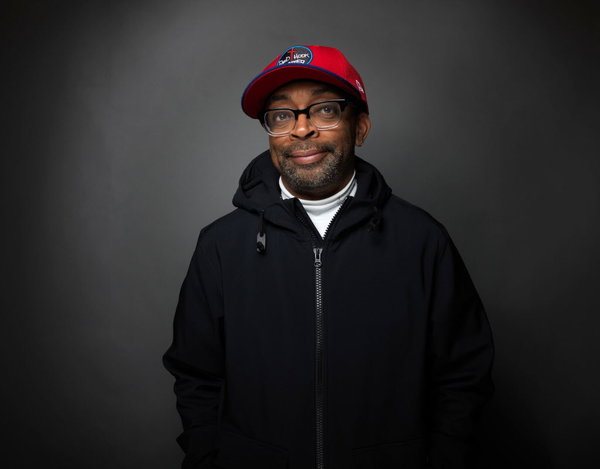
 Spike Lee, without a doubt, belongs on the list of our greatest filmmakers in our history, and did more to advance the movement of independent film than he gets credit for. It would be hard to list a film or two that Spike is best known for– there are so many to choose from. There’s “Do the Right Thing”, “Malcolm X”, “Jungle Fever” and “Crooklyn”, but that only scratches the surface (check out our Lock Yourself In Weekend: with Spike Lee for a list of some of the essentials). Also known for taking controversial stances, you can never accuse him of not having a strong point of view, and voicing it. Spike stopped by the SiriusXM studios this week to sit down with Ron Bennington to talk about his newest film, “Red Hook Summer”. “Red Hook Summer” opens in limited release today. Excerpts from the interview appear below.
* * *
Ron Bennington: Great music in this film.
Spike Lee: Thank you very much. The song you just played was “Desperation” by a great new talent. Her name is Judith Hill. She has 10 songs in the film. And also my main man, the great Bruce Hornsby did the score too, acoustic piano.
Ron Bennington: How did you hook up with Bruce Hornsby?
Spike Lee: I’ve known Bruce over 20 years. I met him through the great tenor saxophonist Branford Marsalis. So we’ve been hanging for 20 years. And also, Bruce also wrote songs for my film “Clockers” and “Bamboozled”.
Ron Bennington: Music’s always been important to you too though, right?
Spike Lee: Yes. My father is a great jazz musician. His name is Bill Lee. At one point, he was the folk bassist. He played for Bob Dylan, Judy Collins, Peter, Paul & Mary. I mean a whole bunch of people.
Ron Bennington: So you grew up around music?
Spike Lee: Grew up around music. My father was dragging me to the Newport Jazz Festival. Down in the village, the Bitter End, the Village Vanguard. So I grew up with music.
Ron Bennington: And of course directed a lot of stuff. “Fight the Power”, probably one of the biggest videos of all time. And this film, there’s a thing with church music in this.
Spike Lee: Right.
Ron Bennington: There is a seductive nature in to this. I haven’t been in and around church in a long time. (Spike laughs) But you get so caught up.
Spike Lee: It’s a Black Baptist church. We sing. Sing to the Lord! Sing to the Lord!
Ron Bennington: But then at a certain place you pull the rug out.
Spike Lee: Well we can’t give too much away though.
Ron Bennington: I don’t want to give any thing away on it.
Spike Lee: Thank you.
Ron Bennington: Because I went into this film not knowing any thing about it.
Spike Lee: Can I just say, I think sometimes that’s the best way because nowadays you get – with the trailers…sometimes you could see a trailer in a movie and you go see it and you see the whole movie. So it’s good sometimes when can just go and not know any thing about the film.
Ron Bennington: You also have a – your lead actor in this film gives such a performance.
 Spike Lee: Clarke Peters.
Ron Bennington: He’s unbelievable.
Spike Lee: Of “Wire” fame and “Treme”.
Ron Bennington: And if you’re not like a cable TV guy, he’s going to be brand new to you. And he takes that character to a place where – do I love him? Do I hate him? Do I not…? Is there redemption? Is there not? You go all over the place with this guy and it’s just again him out there on his own.
Spike Lee: Well thank you for that. Clarke Peters is one of the great American actors working today. I don’t care about who’s famous or what. Clarke Peters can act – stand toe to toe with anybody working there today. And I knew I needed someone of his stature, his humanity, his heart, his whole craft to play this part. Because what makes people conflicted at the end of this film, they have sympathy for him. And that conflicts people. Because if there was a lesser actor, you would hate this guy. You’d hate him with a passion.
Ron Bennington: And you kind of build on that where you have certain feelings about him. Which again is like – again, I don’t want to give anything away. (Spike laughs) You have to be very careful with it.
Spike Lee: I know. You know what’s funny? And thank you for having me on the show. It’s funny doing press for this film for me and the people interviewing me because there’s this thing we want to talk about, but we can’t talk about it because it would give it all away! And it would be one of the biggest spoilers of the year.
Ron Bennington: Well, here’s the deal though. His faith is put out there in the film. And it left me wondering – because faith, like I said, the church, it gets very seductive, you feel like – hey, I wish I had more of this in my life, but at the same time that creates a bunch of followers. A legion of followers. You have to follow.
Spike Lee: Your congregation. The flock.
Ron Bennington: Yeah. So do you see that as a positive or a negative?
Spike Lee: Religion?
Ron Bennington: Yeah. Religion itself. Organized religion.
Spike Lee: Organized? First I’d like to say, I did not grow up going to church everyday. The only time I went to church is when my parents would ship me and my siblings and I down south for the summer. The co-screenwriter James McBride grew up in a church. His parents founded a church in Red Hook that we shot the film at. So we had two different experiences. I, for me, some things I wonder about churches today. You know why? Church in a basketball stadium with 20,000 people. It’s like a basketball game. You got 20,000 people going to church in an arena.
Ron Bennington: It becomes about entertainment. It becomes about money. Because you got to be a blockbuster.
Spike Lee: (laughs) 20,000 people. You’re not passing the plate around. You’re passing a bucket.
Ron Bennington: Right. Right. And to poor people. Because poor people generally have more faith than rich people.
Spike Lee: I think another thing though is that you have this whole thing of church prosperity where the more you give, the better chance you’ll prosper. (laughs) How does that work though?
Ron Bennington: Brooklyn plays into this. And we were talking before you got in. We were talking to some EMTs about how it used to be called “The Red Hook Knife and Gun Club” when you worked over there.
 Spike Lee: Right.
Ron Bennington: And now within just like the past few years…
Spike Lee: Gentrification. You got Ikea, a Fairway. You got the Brooklyn Terminal there so the Queen Mary docks there. And then you still have in themiddle, the Red Hook projects.
Ron Bennington: Yeah. And you’ve made a point in this film that even with Obama in, it doesn’t change things for poor people. That everybody that had a certain amount of hope, it’s still a tough country to be poor in.
Spike Lee: Yes it is, but I would like to say though that even though you said that, I’m still a 100% supporter of President Obama. Here’s the thing though. My views can’t be reflected…..every character in my film can’t think like me. So what you said is true, but that character felt that way, but that’s not my own personal opinion.
Ron Bennington: But it is true, the fact of no matter how well the country’s doing, it’s still going to come back down to each person, each neighborhood. It’s tough to feel great about the economy going up if it doesn’t touch you and your family and your neighborhood.
Spike Lee: True.
Ron Bennington: It becomes a very rough thing for people.
Spike Lee: And what becomes rougher, if you look at the public school system. Because if you cannot afford – thank God – look, I’m very fortunate and my children go to public school here in New York City. But me? I’m a product of New York City public school education. From Kindergarten all the way to John Dewey High School in Coney Island. I went to public school. But when I went to public school, we had art classes. When I went to public school, you had to play an instrument. No ifs, ands or buts. You had to play an instrument. You had to take gym. You had to take physical education. And not just New York City, but all over this country. Art, music and physical education have been cut from the curriculum. Now how can we call our – I’ve said this a couple of times before, I’m going to repeat here on your show. How can we continue to be the greatest country in the world if we’re not providing art, music and physical education for our children in the public school systems of the United States of America. That’s criminal I think.
Ron Bennington: Yeah. And you meet school teacher in the city and basically they’re living a life where – okay, I believe in something so I’m never going to get any financial reward for it. I mean they live a life of borderline poverty now to teach in the city.
Spike Lee: Yes. The teachers are good, teachers are great. Teachers need to be paid more. They don’t make enough. And excuse me one second, any person that’s successful, I guarantee you, they could quickly within a millisecond, tell you the teacher that made an impact on them and put them on the right path to where they became that successful person. No matter what field you are, there’s one teacher. For me, it was a teacher, his name was Dr. Herb Eichelberger. And he’s the one who encouraged me to be a filmmaker.
Ron Bennington: And going over the list of films that you’ve made. You’ve been making them for so many years now.
Spike Lee: Since 1986 with “She’s Gotta Have It”.
 Ron Bennington: And this one, you’ve produced yourself.
Spike Lee: Financed it myself.
Ron Bennington: Financed it yourself. Why did you make that move? Why did you decide to go in pocket for it?
Spike Lee: That’s the only way this thing was getting made. And also, I’m distributing the film myself too. It’s the only way it’s going to get done. This particular story, this is the only way it’s going to get done.
Ron Bennington: To me, I think it really comes down to whether you believe in redemption or not in this film. I personally did not. I was, but the person I saw it with was the exact opposite. And we ended up talking about it the entire evening.
Spike Lee: But here’s the thing though, I’m glad you brought that up. Because what you just said right there is one of the great indicators to me as a filmmaker if I did what I set out to do. If people, no matter what they’re talking about, they don’t have to agree. If they’re talking, engaging in intelligent conversation, going back and forth then I know the film had an impact.
Ron Bennington: It’s a terrific film. And it’s the type of film we talked about that people need to see.
Spike Lee: Thank you very much.
Ron Bennington: So great to see you Spike. And best of luck with everything.
Spike Lee: Look, have me back on the show. I appreciate it.
Ron Bennington: Any time man. I’d love to have you back in
.
* * * * * * * * * * * * * * * * * * * * * * * * * * * * * *
Visit redhooksummer.com for more information or @spikelee on twitter.
.

You can hear this interview in its entirety exclusively on SiriusXM satellite radio. Not yet a subscriber? Click here for a free trial subscription.
.
You can learn more about Ron Bennington’s two interview shows, Unmasked and Ron Bennington Interviews at RonBenningtonInterviews.com.
