

Bobcat Goldthwait Goes into the Woods in Willow Creek
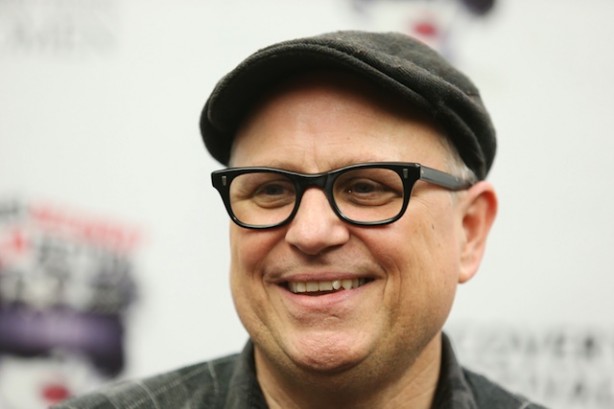
Bobcat Goldthwait is no longer the angry actor and comedian you knew in the 80s. He’s a brilliant film director who makes movies that are so original they often fail to easily fit into familiar genre label. His newest film follows two people who go hunting for the mythical Bigfoot in the California backcountry, but it’s not like any horror movie you’ve seen before. Bobcat stopped by the SiriusXM studios to sit down with Ron Bennington about talk about his new movie, Willow Creek, which opened on Friday June 6th in select theaters and On Demand.
I’m not a fan of the found footage movie.
“In most of these movies, you don’t empathize with the characters at all. And I think something happened, in the 70s’s when slasher pictures came about. We weren’t frightened by the monsters as much as, subconsciously, we couldn’t wait for these teenagers to get killed….I went back to the idea of not cheering for the killer. I wanted the idea that you thought these were very real people.”
When he first started to make Willow Creek, Goldthwait wasn’t even planning to make a horror movie. He had been exploring making a movie about the type of people who chase myths, and about Bigfoot conventions, and guys who fight over whether Bigfoot has a flat head or a pointy head. “That does interest me,” he said, “this idea of what do these characters represent, subconsciously that they keep getting created over and over again in different cultures so what are they?” But when he went to Willow Creek, he reframed the idea for the movie.
“I really thought i was going to film, like a Christopher Guest type movie, in a Bigfoot world. And then when i got there, a couple of things happened. First of all, when you’re an outsider and a weirdo, do you really want to make fun of people who aren’t…that didn’t feel right. And when i went to the actual site and stuff, it did lend itself to this kind of movie. So I had a buddy of mine go, “look, you know, you want to do a musical and a western, why don’t you do this? It’s another kind of movie. So that’s why i pulled the trigger.”
“My character’s not crying. I’m crying. Why are we filming this in the woods?”
“The scene in the tent, which is like 20 minutes long, we shot that where the Patterson-Gimlin footage was shot. It’s a 17 mile dirt road. It takes two and a half hours. Going back and forth, I got two flat tires. There is nothing. There’s no power lines, you’re really in the middle of nothing. We see a mountain lion– we ended up seeing two– I mean it’s scary. And the actor, Bryce, the first time I did that scene, he started crying. And I go, ‘that was a really good take, but you know, I don’t think your character would cry.’ And he goes, ‘my character’s not crying. I’m crying. Why are we filming this in the woods, we could do this in a hotel parking lot. Nobody knows we’re out here.’ I’m like, ‘that’s really good. Go again, just don’t cry.'”
The new film is getting strong support from critics everywhere including raves on Rotten Tomatoes and a great review from the New York Times. And while Goldthwait is proud of Willow Creek, it’s really not how he wants to be categorized, as a filmmaker. “I shouldn’t backpeddle from it, I mean its been very well received,” he told Bennington. “But, and I shouldn’t say stuff like this but, it’s certainly not what defines me. it more defines the 9-year-old me.”
As great as his films are, Bobcat hasn’t had the breakthrough moment where mainstream America has figured out yet that he’s not the guy from the 80’s who yelled a lot in Police Academy movies and on talk shows. He still has difficulties when he goes out on tour doing stand up, dealing with audiences who are expecting a different person to come up on stage. He talked with Bennington about how much he’s changed.
“If you want to get into me smashing up talk shows and setting them on fire, I was just trying to get out of the business and I was mad that …I just ran on anger. And its a drag. Some of these things– you know your anger is really good for fueling comedy and stuff, but it doesn’t have to….[I was] thinking that without it, I couldn’t be creative. And when i got rid of all this anger, I ended up suddenly being way more… if not creative, certainly way more productive.”
It must be true because his productivity seems to be through the roof. He’s just released Willow Creek, he’s touring around the world promoting it (and finding out that some places don’t understand found footage, like Brazil). And he already has a list of other projects in the works including his next film, which he says will be more like Sleeping Dogs Lie and World’s Greatest Dad. He also has started working a documentary about political satirist Barry Crimmins, he’s directing comedian Robert Kelly’s stand up special later this month, and he still tours doing stand up comedy, which, he says, is a love-hate endeavor for him. “I like doing stand up when the audience isn’t there because they have this nostalgic idea of what they’re going to see,” he said, referring to people’s memories of Bobcat from the 80s’s. “And I understand it, but, I prefer going on in rooms where the crowd is so young they weren’t even born when i was relevant, because then i have to try to win them over.”
You can see Willow Creek in theaters across the country, and on Video on Demand through Amazon.com, Itunes, and cable providers. Watch the trailer here, and get more information following @BCGoldthwait on twitter.

Read more original interviews. And visit our home page for the latest comedy news, interviews, and more.
