

The Best Sitcom on TV, Louie, Isn’t a Sitcom at All
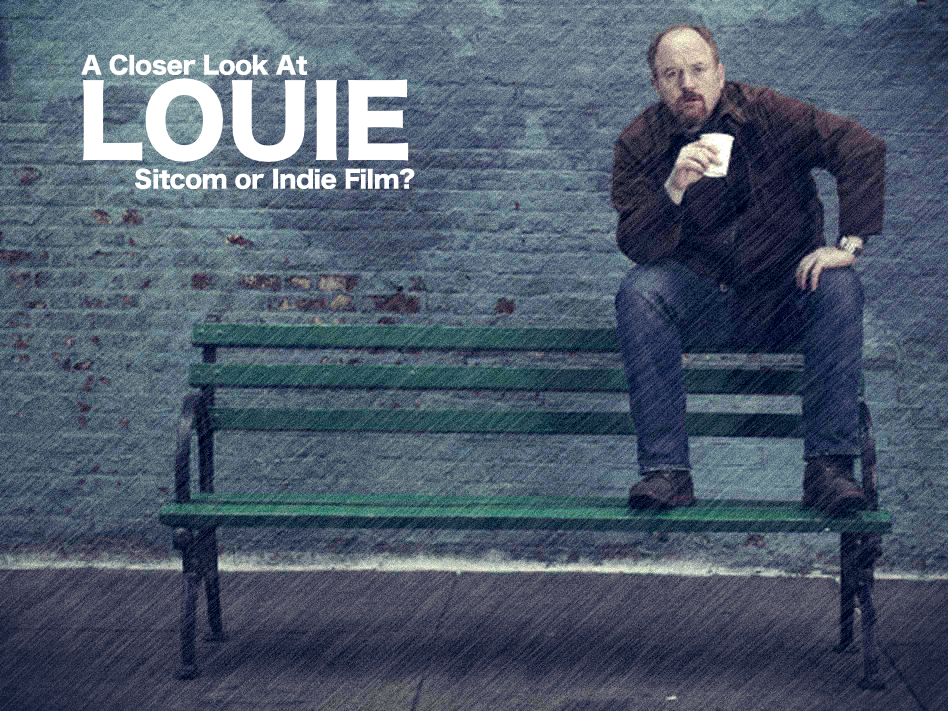
There is a little-known secret to Louis CK’s masterful sitcom, Louie. The secret is, it is not a sitcom at all. In reality, it’s 13 short indie films strung together each season, masquerading as a sitcom. Yes, there are certain situations that are comedic within those little indies. But Louie should be playing at your local indie theater, not on your television each week. The fact that it does is a testament to the brilliance of Louis CK, and his ability to pull the wool over the eyes of everyone who thinks they only like blockbuster, 3D movies.
Television sitcoms tend to follow a formula. Even the best of them stick to the general idea of having a hero, an antihero, a buddy and a love interest. Think of the Seinfeld four, The Mary Tyler Moore Show gang or even The Larry Sanders Show, and you will find these characters in some form. Week in and week out, Louie only features the central and lead character of Louie. While others may float in and out for an episode, such as Todd Barry or Nick DiPaolo as a buddy, or even for a season, such as Pamela as a buddy/love interest, the core of the show is Louie. There are no wacky neighbors, no consistent foils. Only Louie, living his life in a real way. Just like an indie film. Even Louie’s children are far from the standard precocious or wise-beyond-their-years sitcom kids. Louie is a father and his children are a part of who he is. They inform his character but are never used as plot devices.
Sitcoms also tend to have their “A” and “B” storylines in each episode – the main storyline and then a secondary one on the periphery. Again, we can look to Seinfeld for a prime example. While Jerry and George were trying to pitch their show to NBC, Kramer would be off trying to finagle some more Cuban cigars. Since Louie is the only character we follow on each episode, there is never a “B” storyline. Like in any great indie film, we are along with his character for his journey and not distracted by an extra scheme that isn’t integral to the plot.
In reality, it’s 13 little indie films strung together each season, masquerading as a sitcom.
Louie also looks more like a film than any sitcom ever has. The New York City that Louie lives in isn’t the NYC of any other sitcom. While the Sex and the City characters lived in a glamorous Manhattan of red carpets and martinis, Louie takes place in a real NYC. The city Louie travels through is even different compared to how the city is portrayed in film. If Woody Allen’s New York is the one you want to live in, Louie’s New York is the one you do live in.
Obviously, Louie doesn’t follow any pre-existing sitcom formula or convention. But how does that make it an indie film? Well, let’s look at two specific episodes. In the second season episode, “Moving”, Louie realizes that he needs to find a new place to live; he can’t continue to live in the home he lived in when he was married. Louie finds the perfect place- for 17 million dollars. The scene in his accountant’s office, which could have simply been a hilarious exchange about why Louie, with $7,000 in his savings, cannot afford to buy the place, is instead both funny and heartbreaking as we realize that Louie is indeed earnest and hopeful. There is an extremely surreal moment of Louie looking out the window of a possible apartment and seeing a black car pull up across the street, men in black grabbing the homeless man standing on the sidewalk and ushering him into the car. The men in black then proceed to take another homeless man out of the car and place him exactly where the original man was standing. Louie is the only one who sees this, isn’t quite sure of what he sees, and never mentions it again. It has nothing at all to do with the plot line. It’s just a surreal event, reminiscent of something you would see in a Coen Brothers film, not Married with Children. The episode ends with Louie sitting on the steps of the house he can’t afford, stating with determination that he will buy this house. It’s not funny, but poignant. This isn’t a “very special episode” of Louie. It’s just Louie.
If Woody Allen’s New York is the one you want to live in, Louie’s New York is the one you do live in.
Behind the scenes, it’s clear that Louis CK himself sees Louie as an indie and not a sitcom. He writes and directs every episode by himself. There is no “writer’s room”, no staff to decide on plot lines or character development. Louis is an auteur, in the true sense of the word. He edited the first two seasons himself as well, and for season three hired Woody Allen’s longtime editor, Susan Morse. Listen to any commentary track on a Louie DVD, and you will hear CK talk about the “Red camera” he bought for the series and the type of lens he used to shoot a particular scene and why.
Louis CK must have his reasons for passing off Louie as a sitcom. Maybe it’s to sneak in America’s back door and whisper truly good material in their ear while they sleep, so that they will wake up and want and expect more from all of their tv shows without knowing why. Or maybe it’s because he has the creative control he wants without having to fight with a studio or try to raise the money himself, only to be shown in a few independently-owned theaters. Whatever his reason, it is a win for us since it means we can watch Louie from the comfort of our sofas.

The New Season of Louie starts Monday May 5, 2014 on FX at 10pm et. Rewatch Seasons One, Two and Three on AmazonInstant or Netflix.
Read more comedy news, stories, interviews with comedians, videos and comedy clips on our home page. Get more comedy news. Watch more viral videos. Read more interviews with the best comics in the business.
.
