
Flowers: Whimsical Comedy about Unbearable Sadness

You have to give a channel like Seeso credit for finding and nurturing a miniseries like Flowers. Not even 6 months into their launch as a new comedy subscription channel, they are premiering one of TV’s darkest comedies…and one which won’t be for everyone. But saying something isn’t “for all audiences” says nothing about a program’s quality; it simply means a show like Flowers was made for a targeted (rather than broad) audience. But if the show turns out to be for you, it will likely be a show you come to cherish.
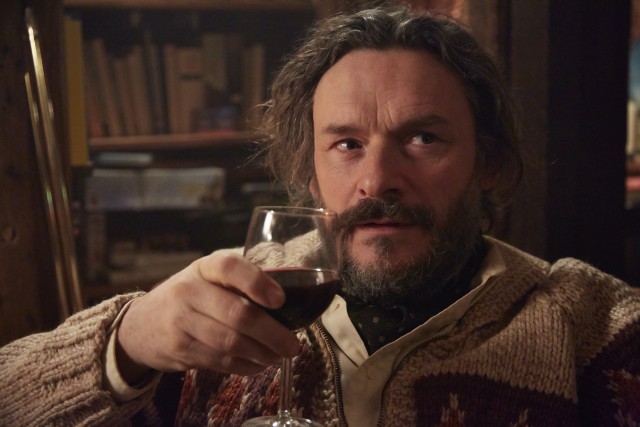
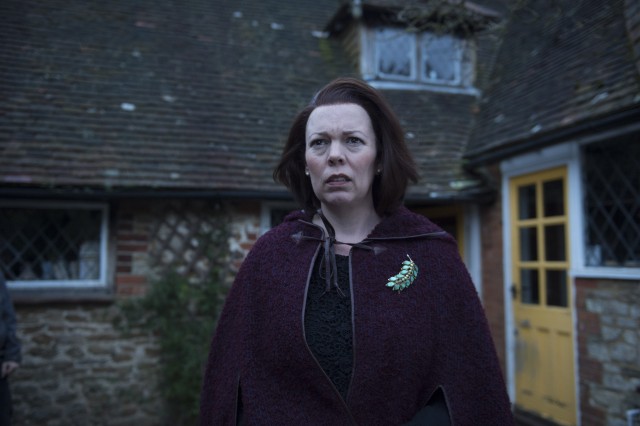
The Flowers of the title are the family at the center of the show. Led by the eternally optimistic Deborah (Olivia Colman), celebrating her 25th anniversary with her husband Maurice (Julian Barratt), a children’s author, and twin children (Daniel Rigby and Sophia Di Martino). Walking through life trying to smile through the bad times, she and her family are overcome by feelings of sadness and unanswered desires. The twins are both in love with the new neighbor, Abigail (Georgina Campbell) and Maurice’s first appearance on screen is a suicide attempt.
The interesting thing about Flowers is the slow and steady way the show goes from absurdist comedy about a dysfunctional family (something we are all too used to seeing on screen) into a richer human comedy, with every character gradually finding the emotional core which anchors their character. Will Sharpe, an English-Japanese actor and filmmaker, created the show and plays the supporting role of Shun…Maurice’s illustrator living on the family’s property. Initially the character comes across like a parody of broad Asian stereotypes from films like 16 Candles. But by the end the show, Sharpe has given his ridiculous character the heart and soul which makes the 4 and 5th episodes heartbreaking…and provides an explanation why he would create a character that seems like such a stereotype. Sharpe referenced that he was inspired by some of the absurdist sketch comedy he was exposed to in both the UK and Japan, but he draws far more from Japanese culture than just the show’s moments of abstract humor, in a way few UK (or US) shows have ever attempted.
As Maurice, the comic Julian Barratt shows a new side as an actor that will surprise audiences familiar with his sketch show, The Mighty Boosh. He’s always been a fine actor with substantial range. But as Maurice, the sense that there is an almost crushing sense of hopeless sadness and depression is shockingly apparent in a remarkably restrained and understated performance. If this weren’t a comedy miniseries airing on new channel, I wouldn’t be surprised to see Barratt up for a best actor in a miniseries Emmy come September. The ache seems to move with him into every scene, changing the tone whenever he arrives. Despite Colman’s almost smiley performance (until it all gets to be too much), she can’t keep the gloom away. At first her smiles seem strangely forced until you realize the character puts it on out of necessity and her own desperation.
As the twins Amy and Donald, Sophia Di Martino and Daniel Rigby are something like an adult version of the Addams Family’s children in the world of Harold and Maude. Amy, an artist who embraces her weirdness, shares Wednesday’s similar stoic qualities. As much as her mother tries to get her to smile or brother shames her for being too weird, only true joy can force a smile across her face. The sad fact that like her father, she’s likely inherited his artistic accomplishments AND clinical depression means its hard for her to find such moments of happiness. Donald, initially introduced as brutish, mad scientist creating a combination cheese smoking fondue machine and super-powered coffee extractor initially seems, like Sharpe’s character, like a purely comic character. But Sharpe and Rigby simply withhold some of his fragile humanity until a little later on when the lasting imprint of growing up in a family with a depressed father and sister had an effect.
Like the recent season of the FXX show, You’re The Worst, the show is ultimately primarily interested in examining the lives of those with clinical depression AND the effect it can have on relationships…both romantic and familiar. To Flowers’s credit, the series shows empathy and understanding towards both those struggling with depression and those who live in the shadows. Deborah and Donald’s scenes of utter confusion over what is happening to their loved one, and frustration at being able to help or fix them, shows them to be victims of depression too. And while the show avoids blaming those with the mental illness (fortunately) Maurice’s growing sense of disconnected narcissism as the disease goes untreated becomes more and more apparent to the audience and Deborah. I would assume that is at least part of the reason the show breaks free of its muddy look only one time in six episodes; a scene in a mental hospital when Maurice finally seems to want to seek help, which is film with a blast of white.
If all this seems a little too serious to be called a comedy, it is worth saying that the show certainly embraces it’s dark comedy, but is consistently laugh out loud funny.
Read more comedy news.


Latest posts by Lesley Coffin (see all)
- Can a Cartoon be a Trojan horse in Politics? Our Cartoon President Uses Lightness to Deliver Truth - June 11, 2019
- Tom Rhodes New 3 Hour Album Covers Something Pretty Big: The World - March 25, 2019
- Ari Shaffir’s Renamed Storyteller Show: An Oral History - February 19, 2019
