

Comedy Central’s Dark Humor Reveals and Replenishes the Roots of Black Joy
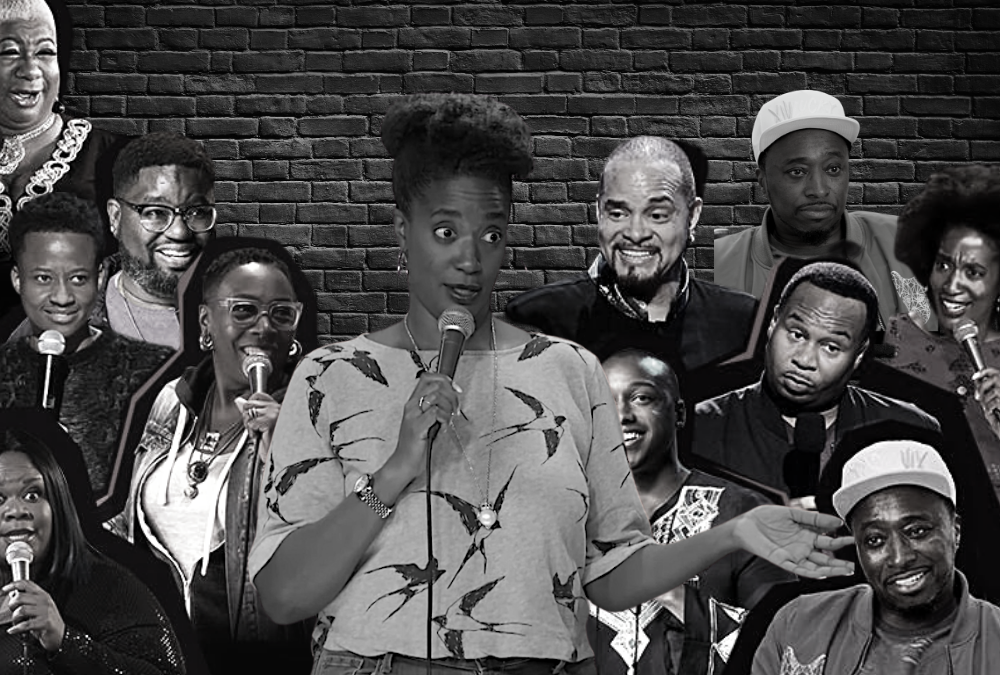
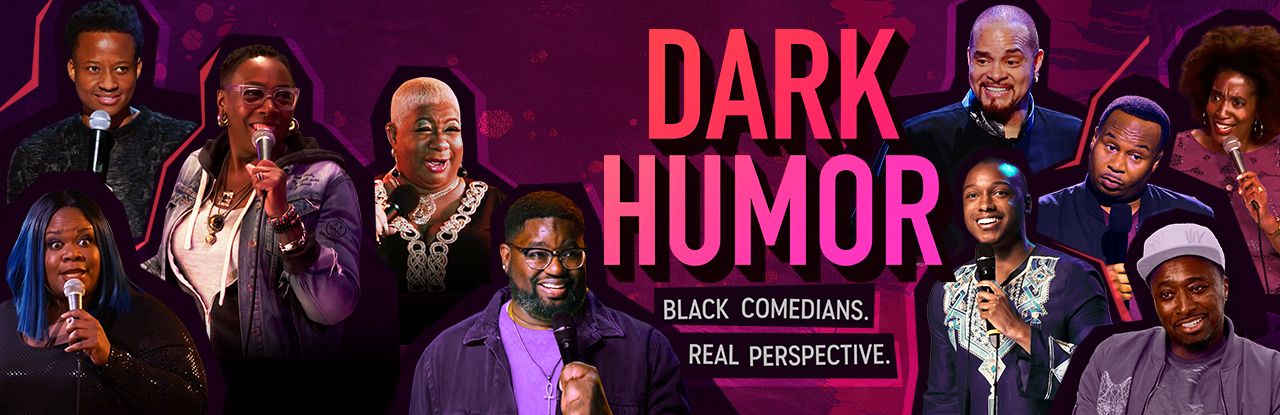
There never has been, and never will be, a simple answer to the trite question of, “What’s it like to be Black in comedy?” And Comedy Central’s Dark Humor honors the intricacy of the question, interspersing interviews with over forty Black comedians in with footage of their acts. Presented in conjunction with Color of Change, Dark Humor functions as an enriched clip show of sorts, presenting snippets of comedians’ bits alongside their take about how they choose to joke, and why, and the larger significance that comedy has taken in the past several years.
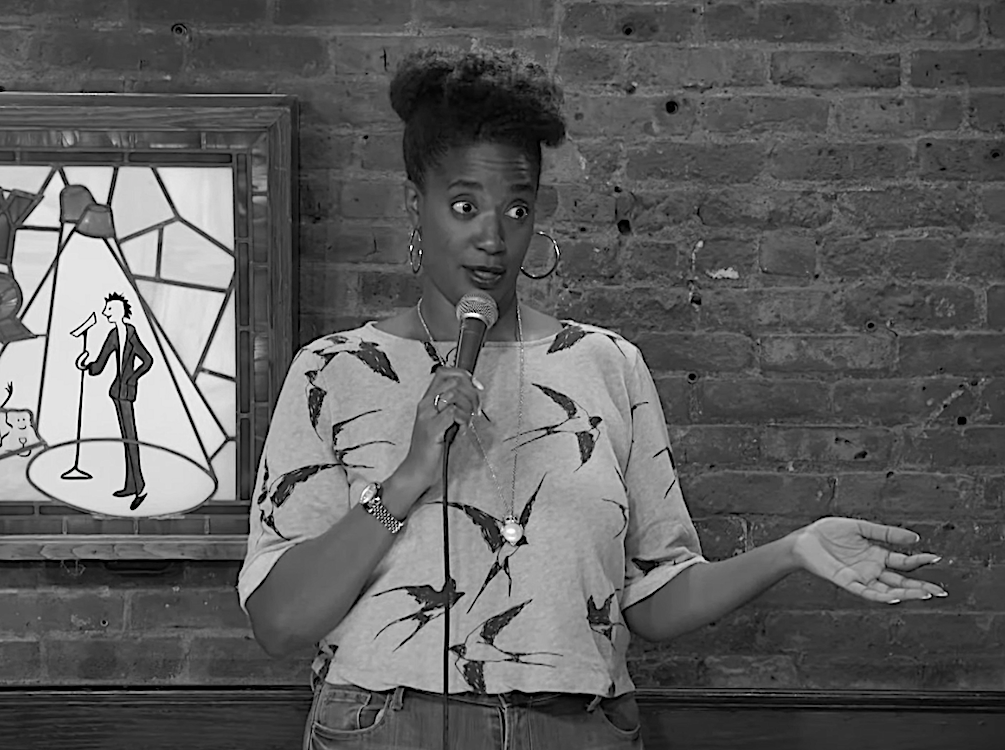
One of those comedians is Chloe Hilliard, who was able to use the documentary’s ongoing rollout (weekly, via Comedy Central’s YouTube channel) as a means to monitor her own development. When the documentary’s testimonials were originally filmed, she remembers being about five years into her comedy career – known for doing Last Comic Standing, but in many ways still coming into her comedic persona. As she looks at it now, she sees herself as being more self-realized as a comedian, but also more aware of what needed to be said on the topic and how she wanted to say it – in her words, “unapologetic.” “To see who I am now onstage, versus who I was in those interviews, I think I was more self-realized of course, and also more confident to say the more uncomfortable things.”
By uncomfortable, Hilliard may be referring to how many comedians in the series refer openly to comedy as a response to trauma or as a sign of resilience. By my count, over thirty comedians participated in the documentary – ranging from older guard comedians like Earthquake, Luenell and Eddie Griffin, to rising talent like Sonia Denis and Rae Sanni – with various levels of experience in between. But one constant that rose to the top regardless of their years in the business: engaging in comedy as a means to express themselves, including to express their feelings on difficult topics. For her part, Chloe said in the first installment “Kinda Juggling Dynamite,” “Through every traumatic experience, there’s been entertainment. That’s what gives me hope.”
Comedians largely get to tell their own stories, with context provided by Professor of African and African American Studies and English at Harvard University, Glenda Carpio and talent producer Bob Sumner. It features a cavalcade of current and rising Black talent, but also pays homage to pillars of the Black comedy tradition like Moms Mabley, Richard Pryor, Dick Gregory, and Marsha Warfield. In community with one another, they paint an important story of comedy serving three primary purposes: as a means to cope with a world that feels bound and determined to keep them down, to raise awareness about those disparate experiences in a disarming way, and to find joy while navigating hard things.
That last piece – Black joy – is frequently left out in documentaries about the Black experience, and so it’s hugely meaningful that director Sacha Jenkins and the series’ creators made sure it was included here. More to the point: it’s important to not just show joy, but joy despite the many factors that conspire to maintain inequality and injustice. As Eddie Griffin said, that laughter generated from Black comedy relieves pressure, which then allows the comedian to educate about those injustices. As Lil Rel says later, it’s a means to laugh away pain. And as Yamaneika Saunders shared when thinking about why comedy means so much to her, she says, “sometimes you can feel powerless. For me, comedy makes me feel powerful.”
There’s an additional sense of power to be drawn in how the documentary originally came to life. What was originally conceived as a feature length project (roughly about two hours), is now being presented in nine parts and will exceed that running time. The result? The opportunity to share thoughts, feelings, and challenges in a bigger venue than brief interviews could ever provide. For example, Part 4, “More Shitty Statistics: Black Women in Comedy” presents a rare opportunity for a number of female comedians, Hilliard included, to:
talk about how hard it is being a woman, but really having the space to explain it. I think a lot of times women comedians will say in any conversation, it’s hard being a woman and especially being a Black woman…and then that’s kinda it. But to actually have, [and] to see the other women also give their answer to that question and to say “Yeah, yup, I agree with that…I’ve seen that,” [lets] you realize you’re not alone.
Dark Humor’s joint production with Comedy Central and Color of Change signifies a desire to change how Black comedy is perceived in the marketplace, and Hilliard agrees that heightened awareness of the many ways Black comedy can look, combined with new ways to get comedy out in the world, could mean a different landscape when the world opens up again. As she spoke about a collective of Black comedians in LA putting on safe and distanced hybrid shows, she echoed the mindset that she revealed in the first installment, she expressed more hope about what comedy will look like:
I think that’s the great thing about chaos and turmoil. A lot of ingenuity comes out of it. And so people are still figuring out a way to do it. I’m excited to see how it grows. That’s the thing with the documentary – I’m so glad I did it, because it is a stamp in time and you don’t see that many young Black comedians talking about the art of comedy […] just to hear working comedians who love it, who are still learning, who are still trying to figure out how to win in the business…to see us tell our unique experiences, it really will hopefully serve as inspiration for others.
Dark Humor, whose first episode dropped February 1st on Comedy Central’s YouTube Channel, will release nine total installments in conjunction with Color of Change. You can also donate to Color of Change’s ongoing work toward racial justice at cc.com/darkhumor.
Read more comedy news.

Amma Marfo
Latest posts by Amma Marfo (see all)
- How Fifteen Years of Pep Talks Helped Joyelle Johnson “Love Joy” Onstage - November 6, 2021
- Ms. Pat’s BET+ Sitcom Flips the Familiar Format Her Way - August 24, 2021
- JFL Awards Highlights! Just For Laughs Honors the Bright Spots of a Largely Unfunny Year - July 31, 2021
