

Camp Appeal: Summer Camp on The Big and Small Screen
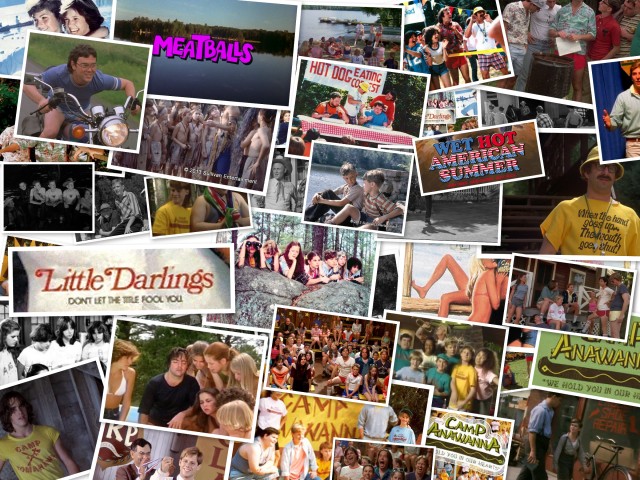
With Wet Hot American Summer: First Day of Camp out on Netflix today, we decided to take a look back at the Summer Camps of the big screens and small.
I love movies and TV about camp. Odd, considering I never went to one. I went to a few structured day camps at the Y, but not the kind of camp we see in movies and TV. You know, the types set in the woods with teenage counselors who don’t really have the maturity to be in charge of anything, especially the well-being of children. The kind of camp that suggests kids wait all school year to cut loose, only to get into trouble. Stories which seem as likely to end with a summer romance as they are to end in murder. Stories which probably only really exist in fiction, but still have some authentic ties to childhood; stories which make those who never went to camp wish they had…and jealous of those who talk about it with nostalgia.
Honestly, I assume that the camp we see on screen is more or less an exaggeration of real sleep-away camp. The way kids simply went feral in these movies for a few weeks and seemed so completely own simply can’t be true. But I think those inflated versions of camp capture why it has had such a cultural impact. For a little while, kids are essentially allowed to both “just be kids” and “be on their own.” They get to have fun and learn some new skills, but also socialize in ways which are completely different from the way they interact at school, where there is structure, teachers, and parents. Camp as it is presented in pop culture, is a time for exploration and adventure lead by kids. Which is why we still have that Hollywood manufactured image of camp we dive into again and again.
And it is probably why comedies and horror films have essentially been the primary genres used in films set at camp. The more serious set films (MASK) don’t really invite the kind of “time to go a little nuts” attitude these films evoke. And honestly, despite camp being used in a lot of horror movies, there aren’t a lot we would honestly call “good.” Friday the 13th is definitely a classic horror film, but more because of what it spawned than its quality. And the cult classic (not a recommendation) Sleepaway Camp’s primary contribution may be as one of the primary influences for Wet Hot American Summer. Comedy works best with movies and TV set in camp because all the kids (counselors, CITs, and kids) aren’t really doing what they’re supposed to be doing. Camp on film is all about breaking rules and having fun doing it, because camp seems like it shouldn’t even have rules.
And that fact is probably why we haven’t had a lot of camp movies recently. That lack of supervision I mentioned would never be allowed in a movie that targeted or focused on kids now and treated so lightheartedly. Understandably, this is probably the reason we’ve pretty much gone 20 some years without a non-parody camp film. The idea of sending kids away from adult supervision goes against our current value system, that even as a fantasy, it doesn’t seem to work now. And when you do add that supervision, the movies get a lot less fun. But that doesn’t mean you can’t enjoy some quality camp movies and TV before or after binge-watching Wet Hot American Summer: First Day of Camp:
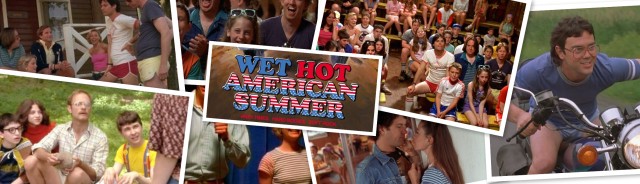
Camp Firewood: Wet Hot American Summer
Few films can honestly say they have an ensemble this large with not just successful working actors, but superstars, but he casting director for this film deserves a prize for who was assembled. But the reason the film has arguably held up as well as it has is the skill of writers David Wain and Michael Showalter who found the perfect blend of parody and homage; real life nostalgia and collective pop culture memory. It is one of the rare movies which simultaneously suggests sincere memories of real life days at camp for the individual creators, with the mass of references and parody the film has not just to other camp movies, but a mass of 80s films and pop culture. And for audiences, who barely knew about these when they first saw the film, their appreciation for the genius of the film has only grown when they realize just how carefully orchestrated some of the scenes and characters were. But even if just watched casually, the simple number of laugh out loud scenes by hilarious people makes this movie a pleasure. Not to mention it’s classic soundtrack of cheesy (great) 80s pop.
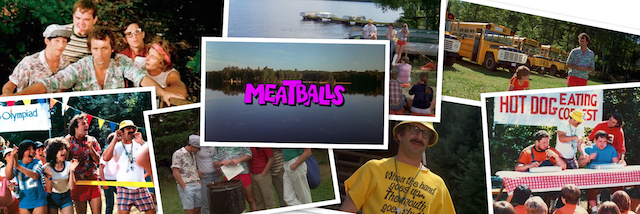
Camp North Star: Meatballs
Along with Sleepaway Camp (which is only worth watching as a bad movie and to see references), this is definitely the film which influenced Wet Hot American Summer more than any other. And while there are somethings which dates this movie as pure 70s (that wrestling scene between Trapper and Roxanne for example) the movie is still a pretty great, classic comedy. The limited interaction we have with the kids are usually hilarious, the counselors sense of complete apathy (how many times does that counselor talk about rest period) almost too realistic, and all the actors playing the CITs were pretty funny as horny teens. But the reason the movie holds up as well as it does is unquestionably because of how great Bill Murray is in the role of T rapper; he sells the emotional honesty with Ruddy, is hilarious as the CITs “bad” example, and still manages to feel like a romantic lead. But when you really think about why Meatballs has last more than 30 years as comedy classic, it isn’t because of Murray’s one great speech. It’s because the entire movie’s theme is based on the message of that speech. The fact that being the best really shouldn’t matter, as long as you give things a try. And that preppy Camp North Star is ruining that for everyone!
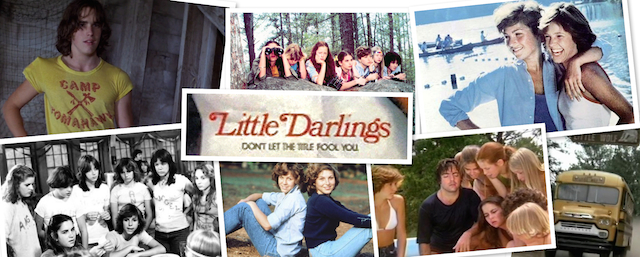
Camp Little Wolf: Little Darlings
If there is ever a movie to be cautious about recommending, it’s this one. Because Little Darlings, made a year after Meatballs, is a weird film which can simultaneously feel exploitive and liberating. At a girls’ summer camp, the teenagers talk about their limited sex lives with the frankness of teenagers raised in the mindsets of the sexual liberation and feminism. The rich girl (Tatum O’Neal) and poor girl (Kristy McNichol) both want to lose their virginity, and target different guys at the camp; an older counselor and boy her same age. Meanwhile while all the girls in camp bet on who have sex first. It’s a little strange that even with the number of flaws in this movie, it still does hold up as an honest exploration of teenage girl’s sexuality and curiosity, which by 1980 was still pretty much a taboo subject on-screen.
But the movie is definitely at its funniest when the girls are talking about things they would never talk about at home, especially a hippy-dippy young Cynthia Nixon as one of the kids.
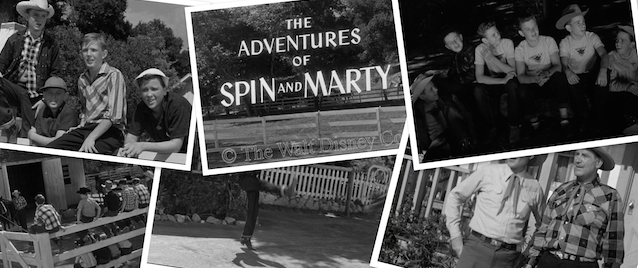
Triple R Ranch: Adventures of Spin and Marty (TV)
Yes, this is definitely the oldest on the list and at times, it’s a pretty weird blast from the past. As in Little Darlings, we have the classic rich kid, poor kid scenario with our title characters. And while the few counselors are adults, the number of times these guys respond to the kids with the passive responses of “boys will be boys” and “let them work it out” is actually kind of hilarious. Their response to a fist fight is to punish or settle the argument. They just set up a boxing ring. And imagine a scenario in which Rudy the Rabbit not only manages to run away from camp, but escapes multiple times with a horse. This is completely a bit of time capsule viewing not just because it is undeniably dated, but because it seems to be the first popular film or TV show about camp. And despite its snail’s pace, this 3 hour show is pretty delightful watch from the “golden age of TV.”
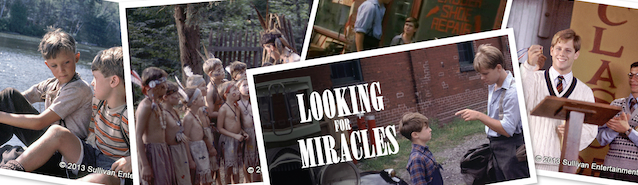
Camp Hochelaga: Looking for Miracles
You might not know about this movie, because according to my research, it was a Canadian theatrical movie that was repurposed as a TV movie for the Disney Channel. But, in the era of VHS, I not only had a copy of this movie, but it lived on the same tape as Meatballs and watched both just about every single summer. So I say this with absolute sincerity, this is an excellent family movie. The film is based on a memoir by A.E. Hotcher (more or less a sequel to his better known memoir King of the Hill), about a kid who receives a college scholarship but in order to pay expenses has to be a camp counselor at a Salvation Army Summer Camp, and lies about his age and experience to get the job. However, he also has to drag the little brother along who hasn’t lived at home for years, because their mother works. Neither knows how to swim or has any experience in the outdoors, and older brother Ryan has no patience for kids, especially lippy ones like the kid he nicknames Ratface. The movie is definitely “family” from start to finish, but manages to be legitimately funny and sweet little movie about brothers.
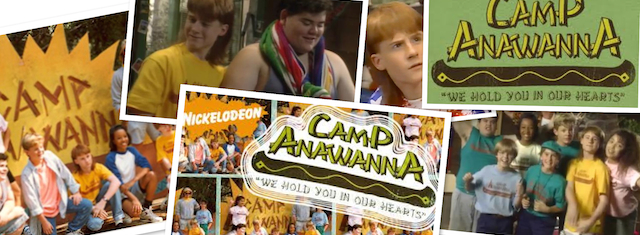
Camp Anawanna: Salute Your Shorts (TV)
Honestly, trying to include at least one “cult” representation of camp is pretty hard. As I mentioned, there are a lot of bad movies about camp which are still pretty watchable because they are set at a camp. But then I recalled a show which is way more baffling than any movie I can recall, called Salute Your Shorts. For one thing, this show seemed to run for decades, despite only producing 26 episodes total. Also for a show about camp, there only seems to be 6 kids ever one screen, along with one counselor. And yet, the show is insanely well rated on IMDB. And ask people who watched Nickelodeon about this show, and their memories seem to be remarkable for a show which hasn’t been on in almost two decades and only has 4 episodes available for streaming. Maybe it’s the fact that they named characters things like Ug, Donkeylips, Sponge, and Budnick (all the girls had more flattering nicknames).
But this show is an unbelievably easy show to fall down the rabbit hole. And you’re guaranteed to find a plethora of 30 somethings who love and remember this show very, very well.
Read more comedy news, stories, interviews with comedians, videos and comedy clips on our home page. Get more comedy news. Watch more viral videos. Read more interviews with the best comics in the business.
.


Latest posts by Lesley Coffin (see all)
- Can a Cartoon be a Trojan horse in Politics? Our Cartoon President Uses Lightness to Deliver Truth - June 11, 2019
- Tom Rhodes New 3 Hour Album Covers Something Pretty Big: The World - March 25, 2019
- Ari Shaffir’s Renamed Storyteller Show: An Oral History - February 19, 2019
