
Lock Yourself In Weekend: Contemporary B&W
Technological advances are always bringing new ways to create film, but when a director chooses to use an old style, they are making an artistic statement. One particularly strong statement is the use of black and white. The release of The Artist in black and white last year, this year’s Frankenweenie, and the upcoming Alexander Payne black and white film prove the art form is alive and well. We picked some of our favorite “modern” films that use the beauty of black and white to their full advantage to create this “Lock Yourself in Weekend” Contemporary Black and White Film Festival.



* * *
1. Psycho (1960)
The last black and white movie Alfred Hitchcock and long after Hitchcock had moved on to making color movies like Rear Window and Vertigo. Using his tv crew and using the cheaper looking black and white photography gives the impression of being a cheap thriller. But the black and white also establishes the creepy sense that something is always a little off, especially when we arrive at the Bates Motel, which seems to be in a place of perminant fog, where shadows can completely hide a face. Watch the shot-by-shot remake in color (or one of the three sequels) to see if color makes a difference.
* * *
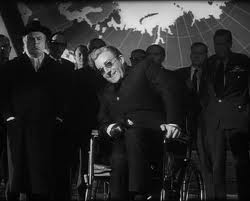
2. Dr. Strangelove: Or How I Stopped Worrying and Learned to Love the Bomb (1964)
Like Hitchcock, Kubrick played with black and white long after color was the norm. But to create the not-so-alternate alternate-relatity of Dr. Stangelove, he filmed in the style of tv news programs or documentaries of the time. The approach gives the social/political satire a chilling realism and more disturbing to audiences. The one thing black and white couldn’t establish however was the pokertable green the characters sit around for most of the movie, a prop Kubrick insisted on, because the characters were treating nuclear war like a game. But it probably shows in the performances anyway.
* * *
3. The Last Picture Show (1970)
Peter Bogdanovich fought with the studio to produce The Last Picture Show in Black and White, wanting to make a film that evoked his heroes John Ford and Orson Welles. And filming the 50’s era movie in stark black and white evoked the isolated depression of a small town in Texas that offers little to its residences. From the dusty streets to the sprawling, empty landscapes, the movie instantly places you in mindset of the young people desperate to escape their small town.
* * *
4. Young Frankenstein (1974)
Mel Brook’s throwback to the Hollywood golden age is one of his subtlest parody films ever made. His retelling of the Frankenstein story is told using the same visual styles and effects of movies from the 1930s and 40s which utilized dramatic lighting, dramatically contrasting black and whites, and inventive make up to give the impression of color. And going back to the 1930s gave Brooks the perfect opportunity include a little song and dance, Fred Astaire style.
* * *
5. Manhattan (1979)
Woody Allen’s ultimate love letter to New York is also oneo of the most beautiful examples of why black and white cinematography is a true art form. Allen has made several films in black and white, but it would be hard to find a better example of the look of a film reflecting the state of mind of its main character. Allen’s character sees the world like a black and white movie from the golden age, when art deco was in vogue, the city was glamorous and even unconvential romances could be thrilling.
* * *
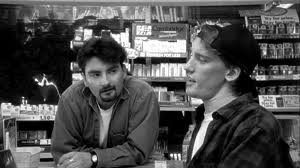
6. Clerks (1994)
Kevin Smith’s first film, made on the cheap, isn’t as “beautiful” as these other films. Rather, it used the look of video servalence to create the impression of a documentary, cinema verite movie about just how boring life in a convience store could be. It adds something to the impression of the movie feeling captured, even when it gets incredibly goofy (like that same actor have about 6 parts in the movie).
* * *
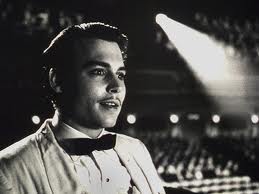
7. Ed Wood (1994)
Tim Burton embraces black and white photography more than most directors today. Some of his films use partial black and white, others are filmed with just a black and white palette But these influences all come from his love of classic Hollywood, and he showed loving tribute with what some call his best and most personal film, Ed Wood. The ultimate metamovie starring Bill Murray, Sarah Jessica Parker, Johnny Depp, and Oscar Winner Martin Landau is filmed to look like the movies Ed Wood the director desperately wanted to emulate.
* * *


* * *


Latest posts by Lesley Coffin (see all)
- Can a Cartoon be a Trojan horse in Politics? Our Cartoon President Uses Lightness to Deliver Truth - June 11, 2019
- Tom Rhodes New 3 Hour Album Covers Something Pretty Big: The World - March 25, 2019
- Ari Shaffir’s Renamed Storyteller Show: An Oral History - February 19, 2019
