

Seen at SXSW: Hysterical Lets Female Comedians Headline in a Raw, Open, and Affirming Way
Seen at SXSW: Hysterical Lets Female Comedians Headline in a Raw, Open, and Affirming Way
“I thought we weren’t talking about that?!”
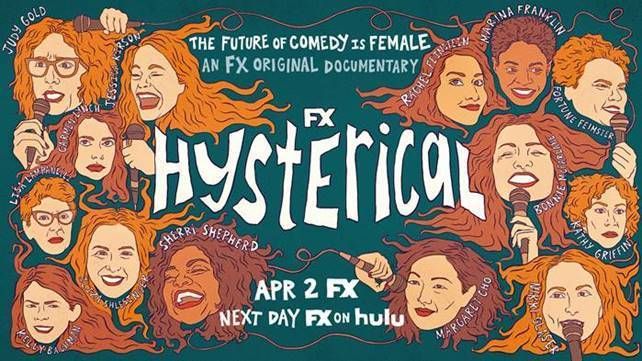
Early on in Hysterical, FX’s feature length documentary about the state of women in comedy (premiering April 2nd, and the following day with FX on Hulu), Iliza Shlesinger pushes back on the question she thinks she’s being asked: are women funny? The interviewer then gently but crucially corrects her, saying in part, “we’re not asking if women are funny, we’re taking that as a fact.” The clarification is a welcome one, borne out by the material that we see over the length of the film.
Directed by Andrea Nevins and executive produced by Jessica Kirson, Hysterical is a thoughtful and comprehensive look at the women thriving in the comedy scene today, while looking back at who paved the path for them to get there – and, briefly, offering a glimpse at what’s to come. After the film’s premiere in the morning, Nevins and Kirson were joined by several of the film’s subjects – Shlesinger, Fortune Feimster, Sherri Shepherd, Rachel Feinstein, and Marina Franklin – and Salon’s Melanie McFarland. Here’s what we learned from their chat:
The film’s subjects were selected to show the breadth of the comedy landscape.
One of McFarland’s earliest questions was about who we see in the film. All told, about thirty different comedians are featured in the doc, with about half that considered “subjects” of it. McFarland wanted to know if there was anyone who they aimed for but couldn’t get. Nevins responded, “we have a very dreamy cast.” Kirson added, “I didn’t want it to be a casting thing” where the list either got too long or tried to cover too much ground. By focusing, it was easier to tell an organized and manageable story.
In addition to the five panelists mentioned above, the film also features interviews with comedians whose careers have gone longer – Judy Gold, Margaret Cho, Kathy Griffin, and Lisa Lampanelli – as well as newer comedians who are still coming into their craft, like Rosebud Baker, Carmen Lynch and Kelly Bachmann. And for the sake of perspective (plus to acknowledge the history of women in comedy), the film also reaches back to salute the work of comics like Moms Mabley, Joan Rivers, Phyllis Diller, Jean Carroll and Sophie Tucker. In Nevins’ assessment of the result, “ I think we did a good job covering multitudes.”
Inspiration for these women came from everywhere.
Speaking of reaching back, when asked about their influences, the women featured on the panel cited all different types of comedy and all different types of people. It’s easy to see the influence of Tracey Ullman in the stories that make up Feinstein’s comedy, the silliness of Carol Burnett in Feimster’s punchlines, or the impact of Wanda Sykes’ standup in Franklin’s stage persona. It’s no surprise to me how influential Whoopi Goldberg’s one-woman show was on Shepherd’s presence, or how much Shlesinger’s physicality owes to 90s era SNL players Cheri Oteri, Molly Shannon, and Ana Gasteyer.
Says Feinstein about the lessons that pioneering women gave to comics today: “these women weren’t afraid to be buffoons or heinous, they weren’t worried about being pretty.” And to that end, the influences weren’t limited to women. It was men who did character work like Martin Lawrence and Jamie Foxx, or SNL mainstays like Chris Farley and Adam Sandler that helped Shlesinger find her voice…without worrying much about if she could do what the men could do. “When you’re actually funny, people get over the fact that you’re a woman pretty quickly.”
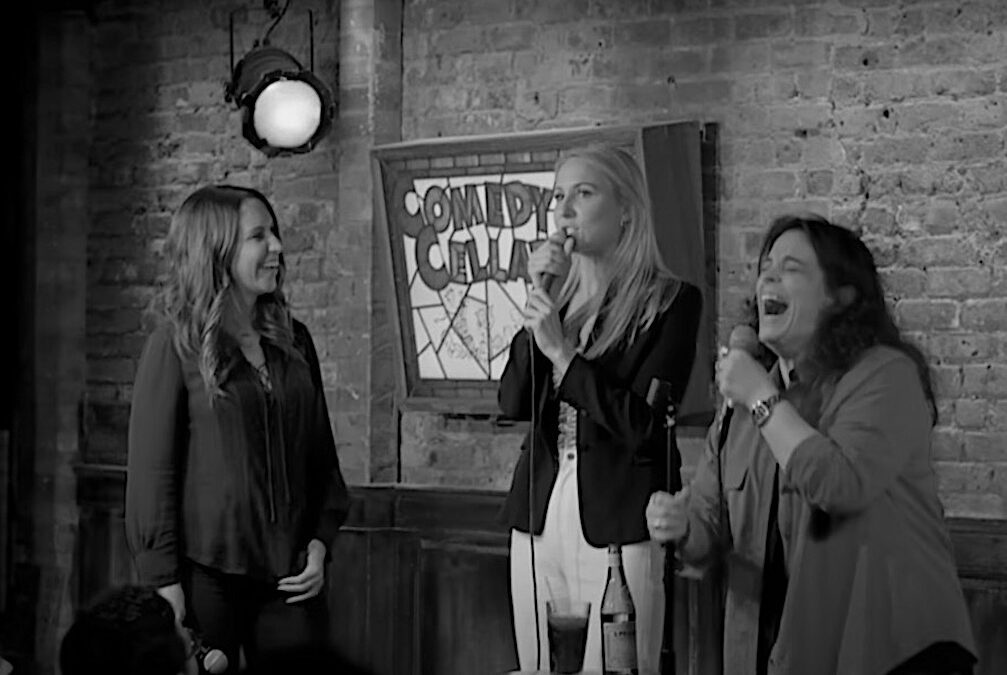
What was clear over the course of the film was just how much these women inspire each other. A highlight of this support came when Rosebud Baker sees Judy Gold at the Cellar, and the former expresses frustration about a recent set. Gold responds with a kind word and a hug, encouraging her to continue working at it. This exchange, placed at the top of the segment titled “Confidence” is a reminder of how inspiration is continually needed…and how women in comedy are continuing to provide it for one another in critical moments.
Female comics are having a different experience – but not in the way most people expect.
Some of the film’s most affecting moments come in the “Going on the Road” segment, where subjects detail what life on the road is like…and the degree to which female comedians have to navigate it differently. As Feinstein points out, it starts the moment you leave the airport, “where they’ll just send any sex offender to come pick you up.” In a moment where society’s continuing to reexamine the lengths women have to go to stay safe, the documentary aligns perfectly as they outline where bodyguards have needed to keep grabbier fans from asserting what they feel are their rights, and how it’s hard to trust promoters or even fellow comics.
During the panel, Shepherd and Shlesinger both discussed having staff members removed from clubs they were visiting. While each found it uncomfortable to assert those rights at first, they realized how good it felt to be able to stand up for themselves and keep themselves (and other women) safe in this way. “It felt SO GOOD!,” Shepherd shared.
This life can be hard in ways that audiences often can’t even begin to imagine.
Another particularly poignant segment of the documentary shows Franklin testing out brand new material in the hours after being diagnosed with breast cancer. As she recounts the journey to the club, she recounts how worried she was about life as a whole, and how this would impact her career. But “by the time I got to the comedy club,” she said, “the tears were gone.” We then get to see her do one of her earliest sets about her cancer in front of an audience, in all of the awkwardness and audience silence that comes with new jokes…and especially new jokes about hard things.
The moment resonated deeply with the panel, which hit its most impactful as each woman shared her tales of how telling the hard jokes, the ones that sometimes evoked groans or will elicit shouts of “not funny!” are the most important for them to tell. For Shepherd and Kirson, these struggles came as they tried to tell jokes about raising kids with special needs. For Feimster, it was about framing the jokes that outline her coming-out story. And for Shlesinger and Feinstein, it was about joking their way through recent miscarriages.
Kirson said of Franklin’s set, “when I saw [her] do it, I was so impressed.” Shepherd highlighted the unity that those jokes can spark; when a comedian can joke about these things in her life, it enables other audience members for whom that’s true to laugh as well. She mentioned hearing from people after a set saying “you made it okay to laugh at this, and it’s heavy.” And collectively, they pointed out that some of these jokes you need as the comic to help you feel better. As Shlesinger put it, “you get to make fun of it because it’s yours.”
To come back around to the question referenced earlier: Shlesinger does eventually answer the question she’s asked, which is, “where do you think the idea that women aren’t funny came from?” Her response? “Men have always gotten to do things first […] so by sheer numbers, more men have been doing comedy for longer. Women were expected to stay home, have children, and then die. It’s not that women aren’t funny, women weren’t allowed to express themselves.” But now, they can. And they’re good at it. Hysterical knows it, and does a beautiful job pulling back the curtain to reveal what it takes to the stage – and what it means to them to do so.
Hysterical premieres on FX on Friday, April 2nd, and arrives on Hulu Saturday, April 3rd.

Amma Marfo
Latest posts by Amma Marfo (see all)
- How Fifteen Years of Pep Talks Helped Joyelle Johnson “Love Joy” Onstage - November 6, 2021
- Ms. Pat’s BET+ Sitcom Flips the Familiar Format Her Way - August 24, 2021
- JFL Awards Highlights! Just For Laughs Honors the Bright Spots of a Largely Unfunny Year - July 31, 2021
