

The 5: Five Great Vonnegut Novels
at
Obviously just about any Vonnegut novel would work in this list, and on any given day, you might pick a different 5. If you’re looking for something great to read, something that will make you laugh, make you think, and that won’t feel like work, anything on this list that you haven’t already read will work perfectly.
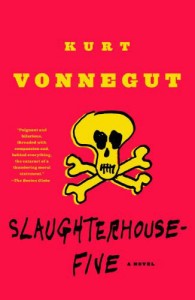
- Slaughterhouse-Five. If there is anyone left who hasn’t read this, what are you waiting for? Consistently ranked as one of the top modern novels and for good reason. Billy Pilgrim has become unstuck in time and is traveling around through his past and his future. Why are we here, do we control our destiny, time, war, life, death and the nature of humanity itself are themes throughout. Like all Vonnegut reads, it inspires great pot talk, and so it goes.
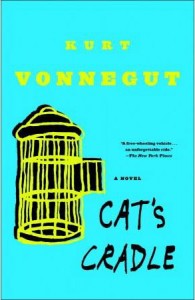
- Cat’s Cradle. Vonnegut takes on science and religion in his fourth novel, which revolves around a man researching and writing a book about the creator of the atomic bomb. His travels lead him to a fictional Carribean island where inhabitants secretly practice a religion called Bokononism which he ultimately adopts. Vonnegut’s invents an entire theology to explorate the nature of religion through this darkly funny and brilliant novel.
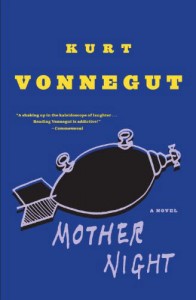
- Mother Night. Howard Campbell is hiding in New York City after a full career as the lead propagandist in Nazi Germany. Was he a criminal? Or a hero? Campbell claims he was working for the U.S. government, but he also points out that while acting as a double agent, he was responsible for many more deaths than he saved. The novel opens with the statement that becomes a theme throughout the book: “We are what we pretend to be, so we must be careful about what we pretend to be.” A riveting look at responsibility, duty, ignorance, love and meaning.
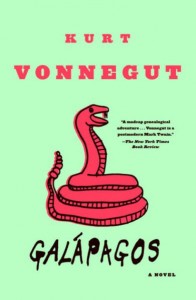
- Galapagos. As the title suggests, Galapagos is about evolution. A small group of people (and a dog) get shipwrecked on a deserted island. Meanwhile, a mysterious disease turns everyone else in the world sterile, leaving the castaways as the sole hope for the future of mankind. Our narrator (who happens to be the son of recurring Vonnegut character Kilgore Trout) is a ghost left to observe the process of human evolution on the island over a period of one million years. Read Galapagos for its unique look at the future of mankind and the meaningless of the the things we tend to hold precious.
- Hocus Pocus. Eugene Debs Hartke did time as war hero, a sexually aggressive college professor, a kind hearted prison official, and finally, as a prisoner himself. He writes his story in bits and pieces on small scraps of paper that he numbers to keep them straight. Read it for the dark humor, and the examination of class systems, social injustice, and the absurdity of so many things that we accept as simply part of life.
*****
